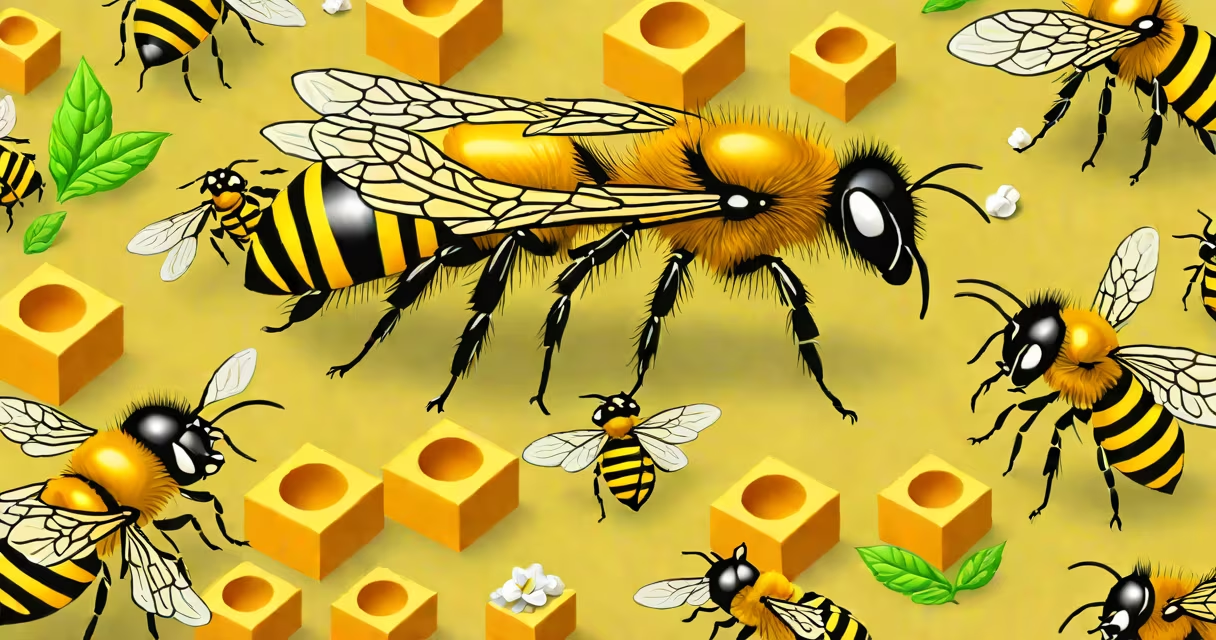
Bees die after stinging because their stinger gets stuck in human skin, tearing away with important organs attached. This only happens to honeybees, not other bees.
Honeybees have a barbed stinger designed to lodge in thick-skinned targets like mammals. When a honeybee stings a person, the stinger's barbs cause it to remain embedded in the skin. As the bee tries to fly away, the stinger, along with part of the digestive tract, nerves, and muscles that control the stinger, are ripped from the bee's body. This traumatic injury is fatal.
Most bees, including bumblebees and solitary bees, have smooth stingers that don't get stuck in skin. These bees can sting multiple times without dying. Honeybees are the only bees that die after stinging mammals.
| Bee Type | Stinger Type | Can Sting Multiple Times? |
|---|---|---|
| Honeybee | Barbed | No |
| Bumblebee | Smooth | Yes |
| Solitary bee | Smooth | Yes |
Queen bees have smooth stingers like other non-honeybees. They can sting multiple times without dying. Queen bees typically only sting other bees, usually to establish dominance or kill rival queens.
Many people believe all bees die after stinging, but this is false. The misconception likely arises because honeybees are the most common stinging insects encountered by humans. Other bees, with their smooth stingers, don't face the same fatal consequence when they sting.
I once helped a neighbor remove a bee nest from their shed. While wearing protective gear, I was stung several times. Later, I learned that the smooth stingers of the bumblebees didn't get stuck in my suit, allowing them to fly away unharmed after stinging.