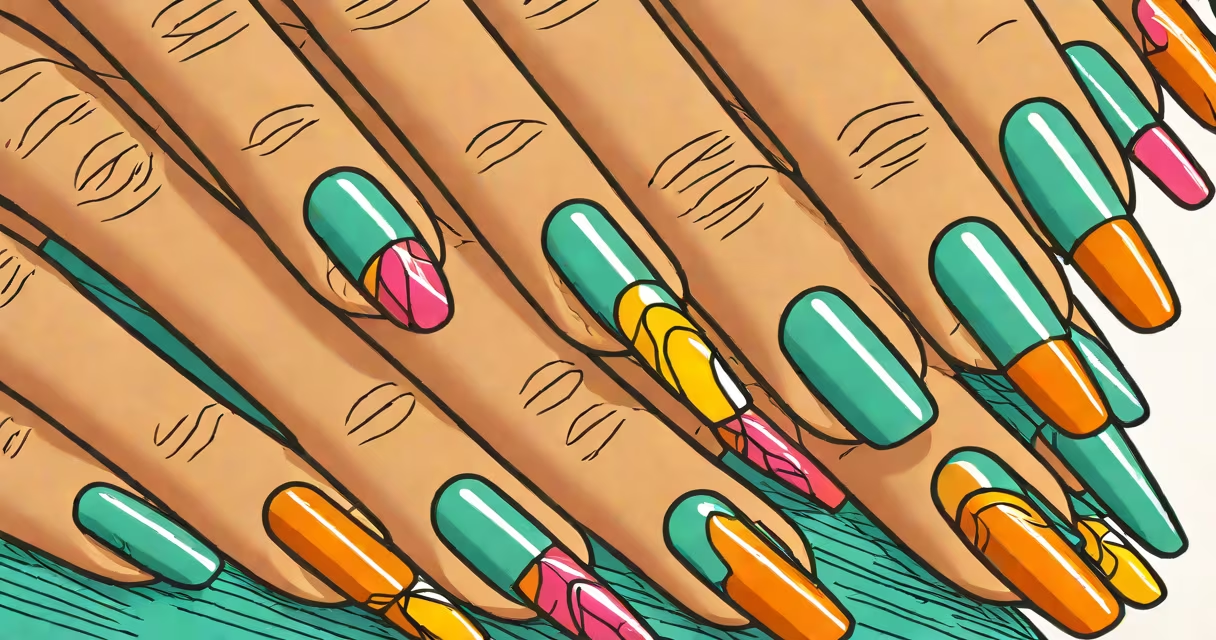
Nails are hard, protective plates that grow from the tissue at the base of your fingers and toes. They're primarily made of a protein called keratin, which also forms hair and the outer layer of skin.
Nails grow from the nail matrix, a specialized area at the base of the nail bed. This growth continues throughout life, with fingernails growing about 3 millimeters per month and toenails about 1 millimeter per month. The visible part of the nail is called the nail plate, while the pink area beneath is the nail bed, containing blood vessels and nerves.
The nail itself has several parts: the cuticle (the tissue at the base of the nail), the lunula (the pale half-moon shape at the base), and the free edge (the part that extends beyond the fingertip). Together, these components create a protective barrier for the sensitive tissues underneath.
While all nails share similar structures, they differ in size and thickness. Fingernails are generally thinner and grow faster than toenails. Some people may have ridges, grooves, or other variations due to genetics, aging, or health conditions.
Nails can also vary in color and texture. For example, some people develop yellow nails due to staining from smoking or certain medications. Others may notice ridges or grooves, which can sometimes indicate underlying health issues.
Nails serve several important functions. They protect the tips of fingers and toes, acting as a shield for the more delicate tissues beneath. They also improve the sensitivity of fingertips, allowing for finer movements and improved dexterity., nails help with grip and manipulation of small objects.
Historically, nails have played a role in survival. They aided early humans in tasks such as digging, scraping, and grasping objects. Even today, they remain essential for daily activities requiring precision and fine motor skills.
One common misconception is that nails are purely decorative. While they can be adorned with polish or artificial enhancements, their primary function is protective and functional. Another myth is that cutting cuticles harms nail growth. In reality, cuticles act as a seal to prevent bacteria from entering the nail bed, so it's best to avoid cutting them.
Some people believe that nails grow continuously after death. However, this is not true. Nails appear longer on deceased individuals because the skin retracts, making the nails seem more prominent.
Maintaining healthy nails involves keeping them clean and moisturized. Regular trimming and filing help prevent breaks and snags. Avoid using nails as tools to pry or pick, as this can lead to damage and infection.
If you notice significant changes in nail color, texture, or growth patterns, it may indicate an underlying health issue. Consulting a healthcare professional can help address any concerns related to nail health.