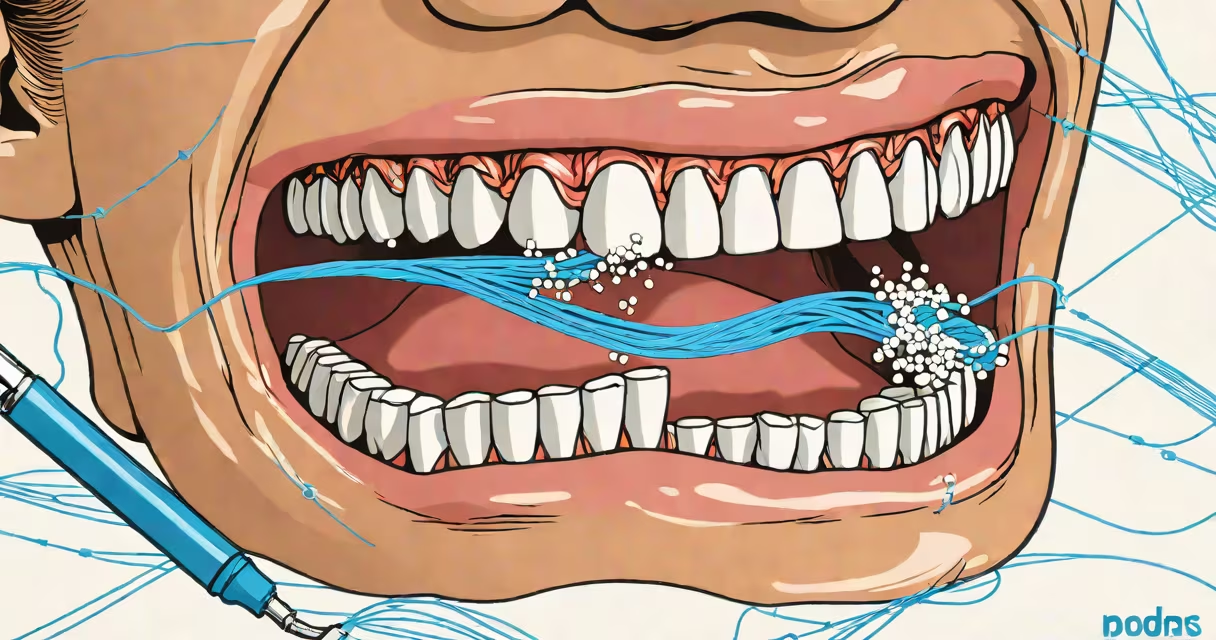
Bad odor between teeth is a common issue caused by trapped food particles, plaque buildup, or gum disease. Proper oral hygiene usually eliminates it.
How it happens
When food particles remain between teeth, bacteria break them down, producing volatile sulfur compounds (VSCs) that cause odors. Plaque, a sticky film of bacteria, forms constantly and releases enzymes that irritate gums, leading to inflammation and pockets where bacteria thrive.
Main causes
The primary causes of bad odor between teeth are:
Poor oral hygiene: Infrequent or improper brushing and flossing allow food debris and plaque to accumulate.
Gum disease: Early-stage gingivitis and advanced periodontitis create spaces where odor-causing bacteria grow.
Dental issues: Cavities, cracked teeth, or poorly fitting dental work trap food and harbor bacteria.
Common misconceptions
Many assume bad breath originates from the tongue or stomach, but interproximal (between-teeth) odor is often the primary source. A 2018 study in Journal of Periodontology found that 60% of participants with chronic bad breath had gum disease, not tongue-related issues.
Solutions
To address bad odor between teeth:
Floss daily: Use waxed floss to remove debris between teeth. Water flossers can help if manual flossing is difficult.
Brush properly: Angle your toothbrush at 45 degrees to clean along the gumline. Replace your toothbrush every 3 months.
Use mouthwash: Antiseptic rinses reduce bacteria but shouldn't replace brushing/flossing.
Stay hydrated: Drink water to stimulate saliva production and rinse away food particles.
See a dentist: If odor persists, schedule a cleaning and check for gum disease or cavities.
I once worked with someone who diligently brushed twice daily but skipped flossing. After adopting daily flossing, their bad breath improved noticeably within a week.