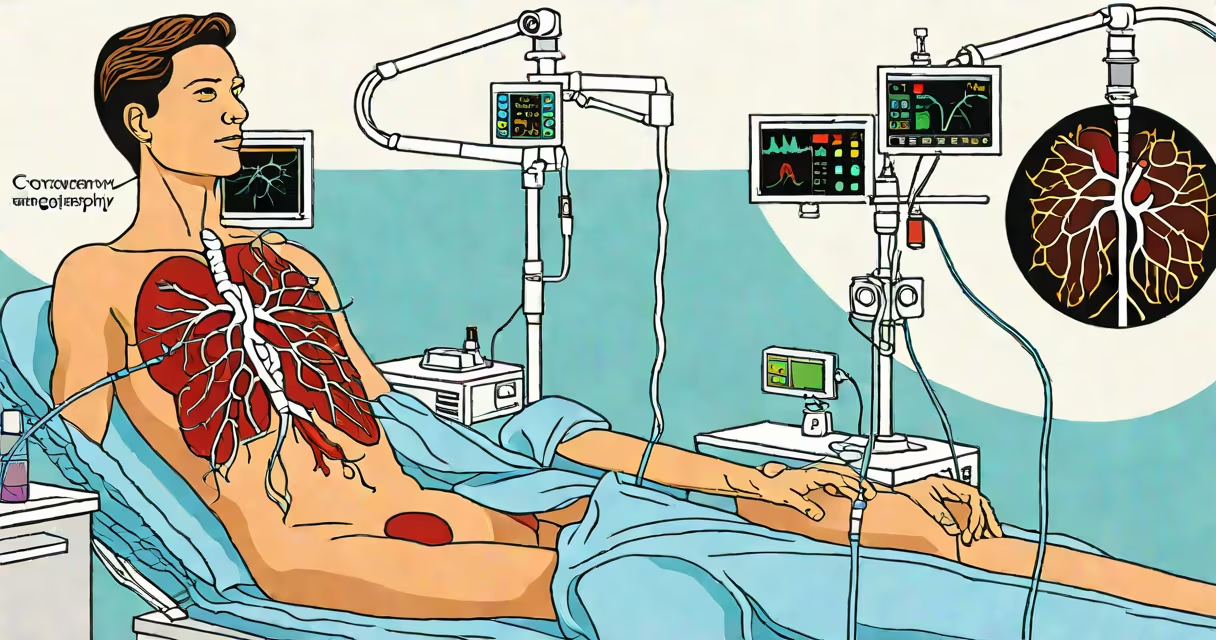
The test begins by inserting a thin tube called a catheter into a blood vessel, usually in the arm or groin. The catheter travels through the blood vessels to the heart, where a contrast dye is injected. X-ray images capture the flow of dye through the coronary arteries, highlighting any obstructions or irregularities.
| Type | Description | Common Use |
|---|---|---|
| Diagnostic Angiography | Standard procedure to identify blockages | Initial diagnosis of coronary artery disease |
| Interventional Angiography | Combines diagnosis with treatment (e.g., stent placement) | Immediate treatment of blockages |
| CT Angiography | Uses CT scans instead of x-rays | Non-invasive alternative for some patients |
Doctors perform coronary angiography to assess symptoms like chest pain, shortness of breath, or abnormal results from other heart tests. It's important for diagnosing coronary artery disease, planning treatments such as angioplasty or bypass surgery, and evaluating the effectiveness of previous interventions.
According to the American Heart Association, coronary angiography is considered the gold standard for diagnosing coronary artery disease due to its accuracy and ability to provide immediate results. The procedure typically takes 30 to 60 minutes and is performed in a hospital setting under local anesthesia.
Many people confuse coronary angiography with other heart imaging tests like stress tests or echocardiograms. Unlike these non-invasive tests, angiography involves inserting a catheter and is more invasive but provides more detailed images of the coronary arteries.
Another misconception is that angiography is only used for diagnosis. However, interventional angiography allows doctors to treat blockages during the same procedure by placing stents or performing angioplasty.
John, a 55-year-old man, experiences severe chest pain and visits his doctor. After initial tests suggest coronary artery disease, his doctor recommends coronary angiography. During the procedure, the catheter is inserted into John's radial artery, and the contrast dye highlights a significant blockage in one of his coronary arteries. The doctor performs an angioplasty during the same procedure, inserting a stent to open the blocked artery. John recovers quickly and avoids the need for more invasive surgery.
During my time working in a cardiac clinic, I observed several coronary angiography procedures. One patient, a 60-year-old woman with a family history of heart disease, underwent the test after experiencing shortness of breath. The angiography revealed a moderate blockage, which was treated with medication. The procedure provided clear, immediate results, allowing her doctor to develop an effective treatment plan without delay.
The coronary angiography procedure is a critical diagnostic tool for assessing coronary artery disease. By providing detailed images of the coronary arteries, it enables doctors to diagnose and treat blockages effectively, often during the same procedure. Understanding this process can help individuals recognize its importance in maintaining heart health.