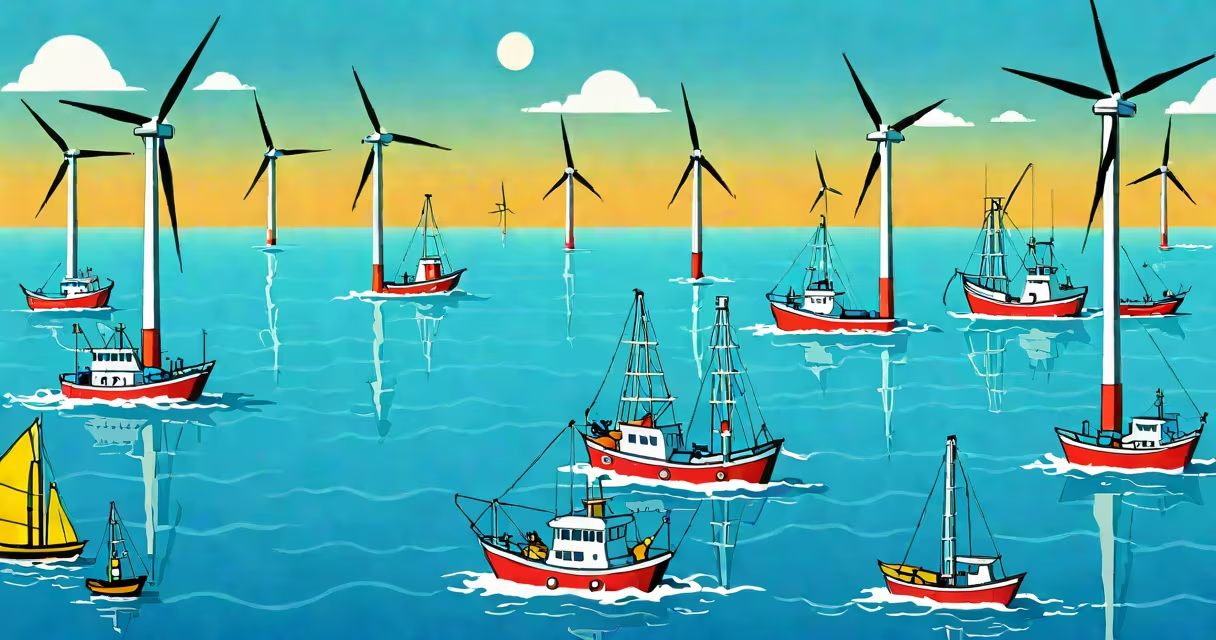
The blue economy is the sustainable use of ocean resources for economic growth, improved livelihoods, and jobs while preserving the health of marine ecosystems. It encompasses industries like fisheries, aquaculture, shipping, offshore renewable energy, and tourism.
Unlike traditional economic models that prioritize short-term gains, the blue economy operates on principles of sustainability, circularity, and resilience. The concept gained global traction through the United Nations' Sustainable Development Goal 14: Life Below Water, which aims to conserve and sustainably use oceans, seas, and marine resources.
The blue economy functions by balancing economic activity with environmental conservation. For example, offshore wind farms generate clean energy while minimizing disruption to marine life. Similarly, responsible fishing practices ensure fish populations remain stable for future generations.
A key principle is circularity, where waste is minimized and resources are reused. For instance, seaweed farming absorbs carbon dioxide, helping mitigate climate change. The Global Ocean Commission estimates that the blue economy could contribute $2.5 trillion to the global economy by 2030 if managed sustainably.
| Sector | Examples | Sustainability Focus |
|---|---|---|
| Fisheries and Aquaculture | Responsible fishing, sustainable seafood certification | Preventing overfishing, maintaining biodiversity |
| Renewable Energy | Offshore wind, tidal energy | Reducing carbon emissions, minimizing habitat disruption |
| Shipping and Ports | Green shipping initiatives, efficient port management | Reducing pollution, improving energy efficiency |
| Tourism | Eco-tourism, marine conservation tours | Protecting natural habitats, promoting local cultures |
The blue economy differs from the traditional economy in its focus on long-term sustainability. While traditional economies often prioritize immediate profits, the blue economy integrates environmental stewardship into its core principles. For example, the traditional economy might deplete fish stocks for short-term gain, whereas the blue economy implements quotas and seasonal closures to ensure fish populations recover.
Another distinction is the emphasis on circular practices. In the blue economy, waste from one industry becomes a resource for another. For instance, fish processing waste can be converted into animal feed or fertilizer, reducing landfill use. This contrasts with linear economic models that generate significant waste.
Another challenge is ensuring global cooperation. Oceans are shared resources, and effective management requires international agreements and enforcement. The United Nations Convention on the Law of the Sea (UNCLOS) provides a structure, but compliance varies among nations.
Firsthand, I observed a blue economy initiative in action during a visit to a coastal community in Maine. The town had transitioned from traditional fishing to a mixed approach that included aquaculture and eco-tourism. This shift improved water quality and marine biodiversity.
The blue economy represents a forward-thinking approach to ocean resource management, combining economic growth with environmental sustainability. By adopting circular practices and international cooperation, it offers a viable path toward a healthier planet and prosperous communities.