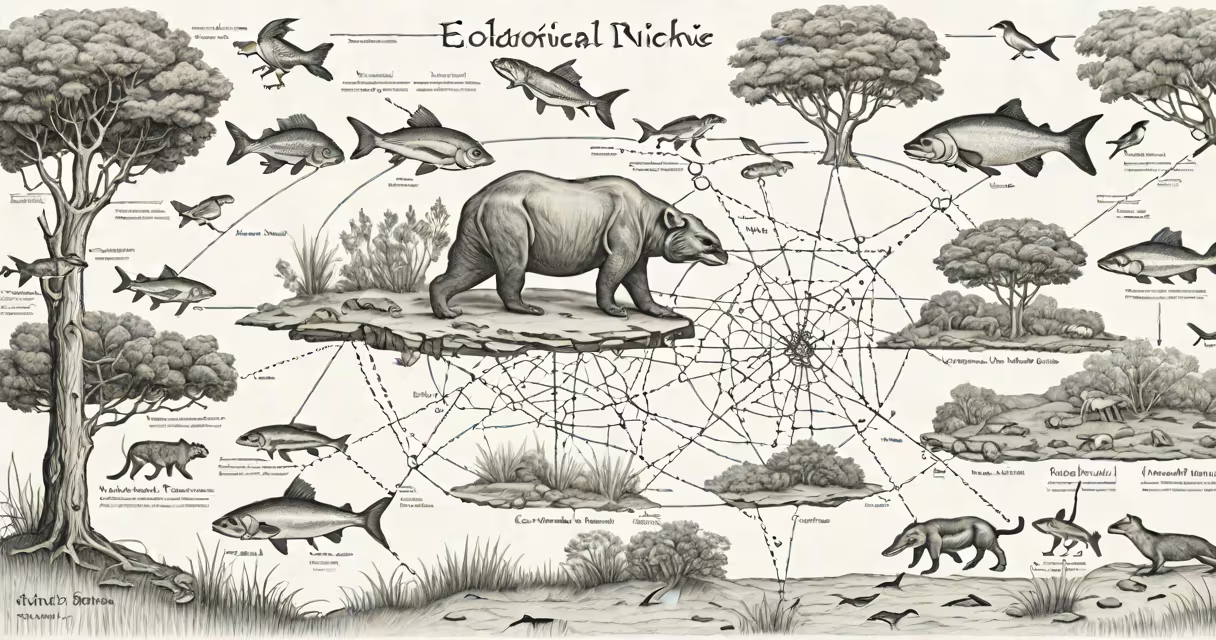
An ecological niche describes a species' role in its environment, including its resources, behaviors, and interactions with other organisms. It defines how a species survives, reproduces, and avoids predators within its system.
Every species occupies a specific niche, which includes both physical and functional aspects. The physical aspect covers where the species lives (habitat), while the functional aspect details what it does (its role in the system). For example, a hawk's niche involves hunting small mammals and birds during the day, using its sharp vision and aerial agility.
Ecologists recognize two primary types of niches:
| Type | Description | Example |
|---|---|---|
| Fundamental Niche | The full range of conditions under which a species could potentially live and reproduce in the absence of competition or predation. | A plant species that could grow in various soil types but only thrives in one due to competition. |
| Realized Niche | The actual conditions under which a species lives, considering competition, predation, and other limiting factors. | The same plant species only growing in sandy soil because other plants outcompete it in other soil types. |
Niches help maintain biodiversity by reducing competition. When species occupy different niches, they can coexist without directly competing for the same resources. This concept is known as resource partitioning. For instance, different bird species in the same forest may eat different types of insects or fruits, allowing them to share the same habitat without competing.
Niches also influence system stability. Species play unique roles, and their loss can disrupt the balance. For example, the extinction of the passenger pigeon in the U.S. affected forest regeneration because they were a key seed disperser.
Many people confuse ecological niches with habitats. While a habitat is the physical location where a species lives, a niche encompasses the species' role and interactions within that habitat. For example, a pond is a habitat, but the niche of a frog in that pond includes its diet, predators, and breeding behavior.
Another misconception is that niches are static. In reality, niches can shift due to environmental changes, such as climate shifts or the introduction of new species. For example, the invasive Burmese python in the Florida Everglades has altered the niches of native species by introducing a new top predator.
Honeybees occupy a well-defined niche in ecosystems worldwide. Their niche includes:
Honeybees' niche is so important that their decline can lead to reduced crop yields and disrupted ecosystems. This highlights the importance of understanding and preserving ecological niches.