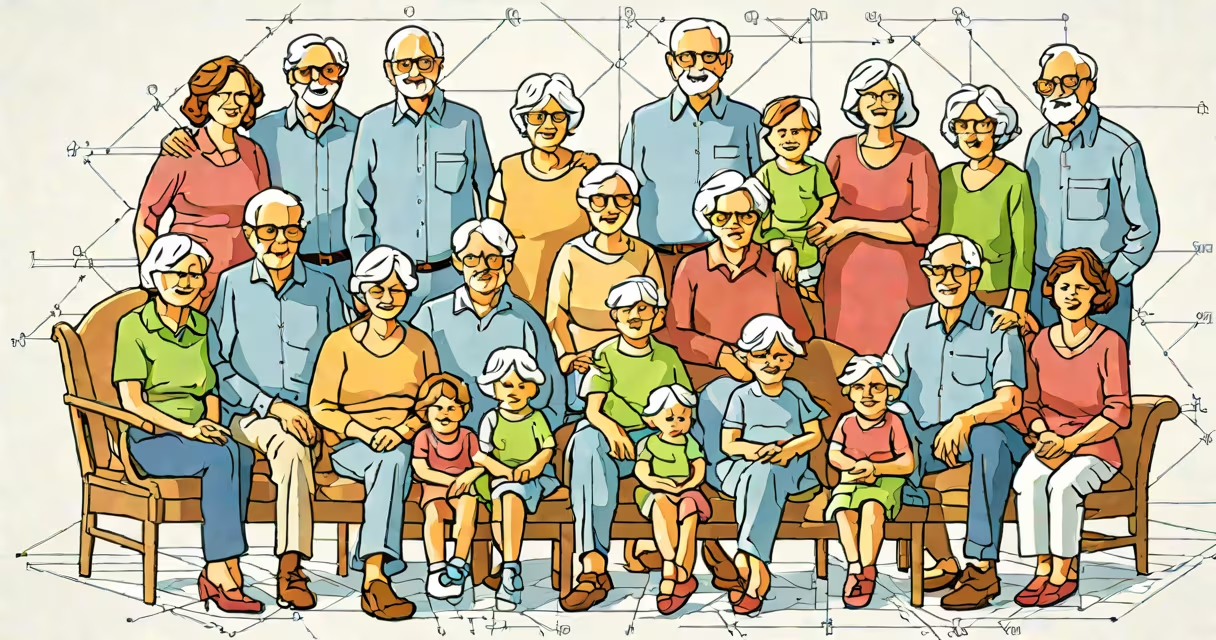
A grandparent is the parent of someone's parent, forming the third generation in a family lineage. This role carries both biological and legal significance, depending on cultural and jurisdictional contexts.
Grandparents connect generations, providing continuity in family history and traditions. They may live with their grandchildren, offer childcare, or maintain long-distance relationships. In some cultures, grandparents hold formal roles in decision-making or spiritual guidance.
Biologically, a person becomes a grandparent upon the birth of their child's offspring. Legally, some jurisdictions recognize grandparents' rights to visitation or custody, especially if parental rights are terminated.
| Type | Description | Example |
|---|---|---|
| Biological Grandparent | The parent of one's parent by blood | John is the father of Sarah, who is the mother of Emily |
| Step-Grandparent | The spouse of a biological grandparent | Maria marries John, becoming Emily's step-grandmother |
| Adoptive Grandparent | A non-biological grandparent through adoption | David adopts Sarah, making him Emily's adoptive grandfather |
| Legal Grandparent | A grandparent recognized by court order | A judge grants visitation rights to Linda, the biological grandmother |
Grandparents often serve as emotional and financial support systems. Research from the National Institutes of Health shows that involved grandparents contribute to grandchildren's emotional well-being and academic success.
In some legal systems, grandparents have standing in custody battles or inheritance disputes. For example, Florida law allows grandparents to petition for visitation if it serves the child's best interest.
Many assume grandparents are always elderly, but younger grandparents exist due to early parenthood. For instance, a 40-year-old parent of a 20-year-old who has a child becomes a grandparent at 40.
Another myth is that grandparents lack authority. In some cultures, they hold significant influence over family decisions, including education and marriage.
Blended families complicate traditional definitions. A grandparent might be a step-parent's former spouse, creating complex relationships. Legal recognition varies by state, with some requiring formal adoption or court orders.
I've seen this firsthand when helping a friend go through visitation rights as a step-grandfather. The process required proof of a meaningful relationship with the grandchild, demonstrating how legal definitions extend beyond biology.