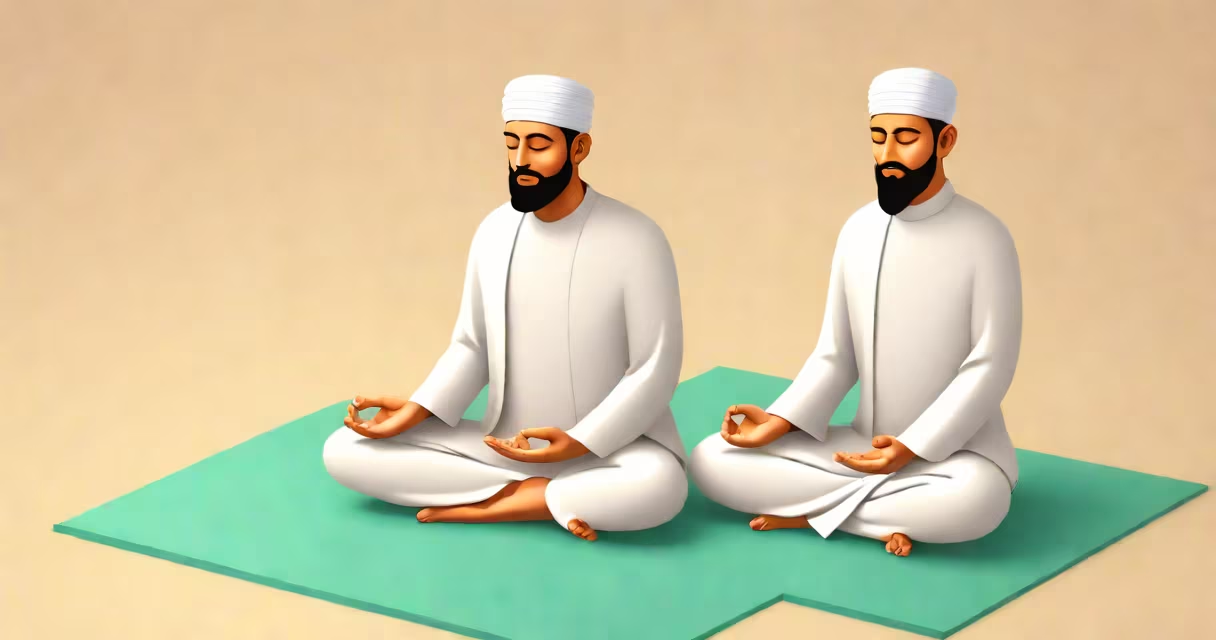
Yes, Muslims engage in meditation as part of their spiritual practices, though it differs from secular mindfulness techniques. Islamic meditation, primarily practiced through reflection and remembrance of God (dhikr), is deeply rooted in the Quran and Hadith.
Islamic meditation focuses on inner peace and spiritual connection rather than emptying the mind. The most common form is dhikr, the repetition of God's names or short phrases like "La ilaha illallah" (There is no god but Allah). This practice fosters mindfulness and a deeper relationship with the Divine.
Islamic meditation includes several forms:
Muslims meditate in various settings-private spaces, mosques, or during daily prayers. The purpose is to cultivate inner peace, strengthen faith, and seek guidance. For example, Prophet Muhammad (PBUH) often retreated to a cave for meditation before receiving revelations.
Some assume Islamic meditation is identical to Buddhist or Hindu practices, but it differs. Unlike secular meditation, which may focus on mindfulness alone, Islamic meditation always centers on worship and submission to God., while some forms of meditation in other religions may involve emptying the mind, Islamic meditation emphasizes filling the mind with divine thoughts.
Another misconception is that meditation is not part of mainstream Islam. However, the Quran explicitly encourages reflection and remembrance, making it a core practice for all Muslims. For instance, the Quran states: "Those who believe, and whose hearts find satisfaction in the remembrance of Allah: for without doubt in the remembrance of Allah do hearts find satisfaction" (13:28).
Islamic meditation remains a useful tool for spiritual growth, offering Muslims a way to connect deeply with their faith and find inner tranquility. Whether through dhikr, muraqaba, or tafakkur, these practices provide a structure for living a mindful, God-centered life.