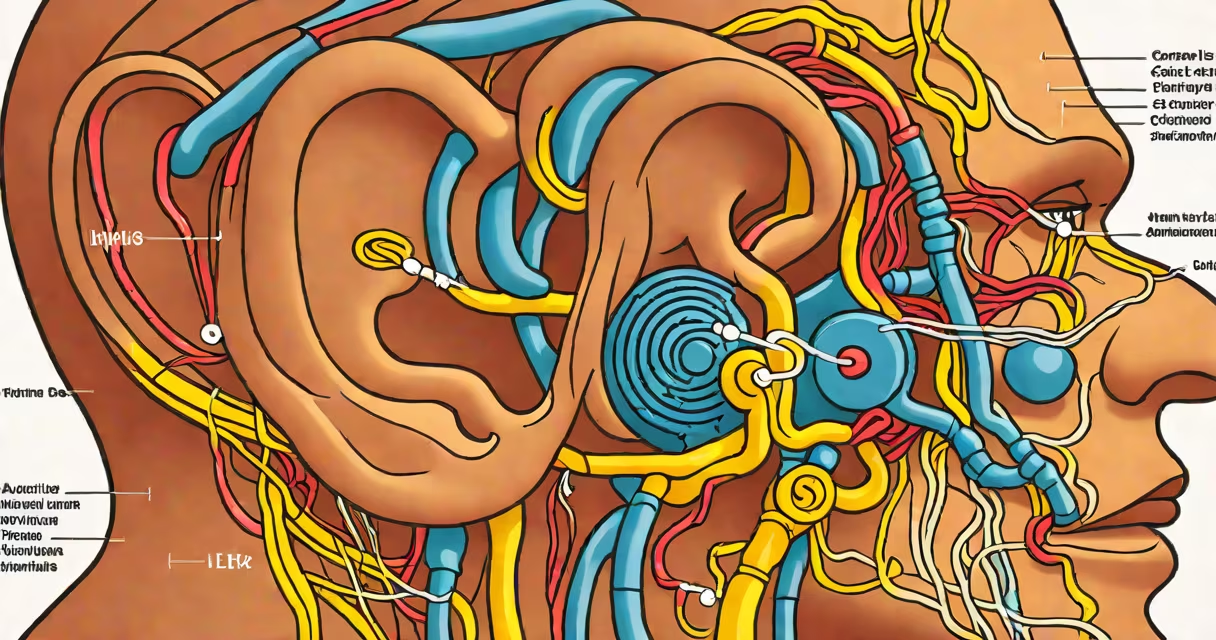
Tinnitus occurs when the brain perceives sound that isn't physically present, typically described as ringing, buzzing, or hissing in the ears. This happens due to damage or changes in the auditory system, often involving the inner ear hair cells or auditory nerve.
The ear converts sound waves into electrical signals that the brain interprets as sound. Hair cells in the cochlea vibrate in response to sound, triggering nerve impulses sent to the brain. When these hair cells are damaged or the auditory nerve is affected, the brain may generate phantom sounds.
Tinnitus can result from various factors, including:
Certain activities or conditions can worsen tinnitus, such as:
Many people believe tinnitus is always permanent or caused solely by aging. However, temporary tinnitus can occur after loud noise exposure, like attending a concert., while hearing loss is a common cause, tinnitus can also develop in individuals with normal hearing.
Another misconception is that tinnitus is purely psychological. While stress can exacerbate symptoms, the condition originates from physical changes in the auditory system. Understanding the root cause is important for effective management.
There is no cure for chronic tinnitus, but treatments can help manage symptoms. Options include sound therapy, cognitive behavioral therapy, and medications to address underlying conditions. Protecting your ears from loud noises and managing stress can also reduce the risk of developing tinnitus.
For those experiencing sudden or severe tinnitus, consulting a healthcare professional is essential to rule out treatable causes, such as ear infections or medication side effects.