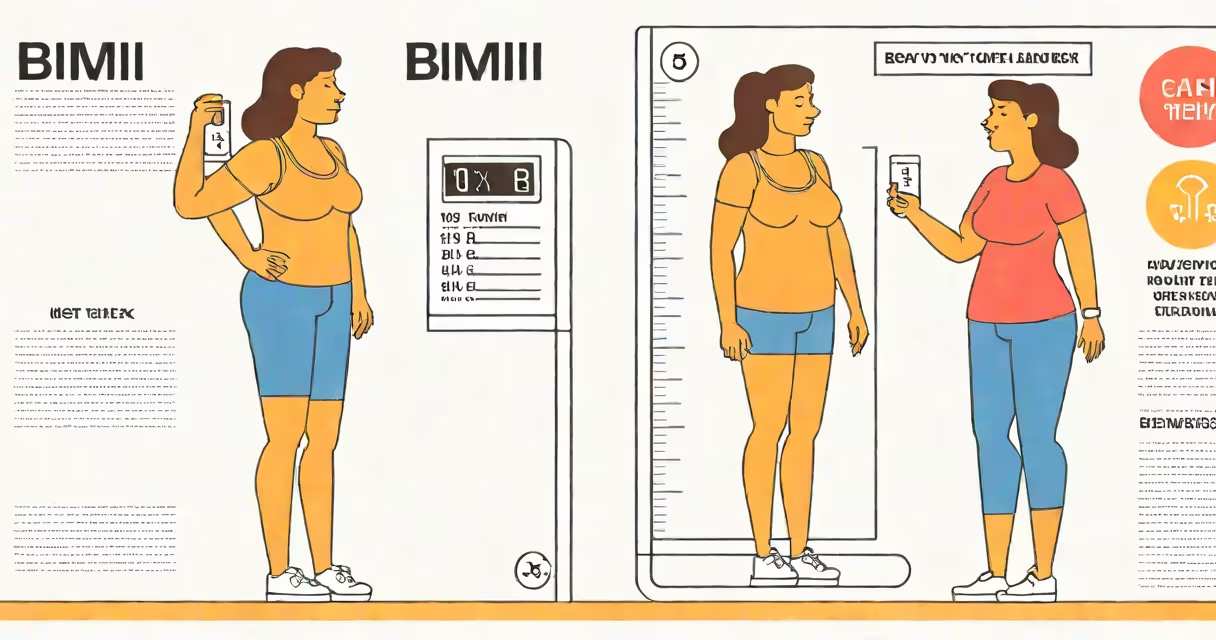
Your body mass index (BMI) is a ratio of your weight to your height. It's a screening tool for potential weight-related health risks.
BMI estimates body fat based on height and weight. The calculation assumes a direct relationship between these measurements and body fat percentage, though it doesn't account for muscle mass or bone density.
There are two common ways to calculate BMI:
Doctors use BMI to assess weight categories, which correlate with health risks. The Centers for Disease Control and Prevention (CDC) notes that BMI is a useful starting point for discussions about weight and health.
For example, a BMI of 30 or higher may indicate obesity, which increases the risk of heart disease, diabetes, and other conditions. However, BMI isn't diagnostic-it's a screening tool.
Many people confuse BMI with body composition. Unlike BMI, body composition measures fat, muscle, and bone mass separately. An athlete with high muscle mass might have a high BMI but low body fat.
BMI also doesn't distinguish between fat distribution patterns, such as visceral fat around organs, which poses greater health risks than subcutaneous fat under the skin.
To calculate your BMI manually, follow these steps:
For example, if you weigh 70 kg and are 1.75 m tall, your BMI is 70 ÷ (1.75 × 1.75) = 22.9.
Alternatively, use an online BMI calculator for convenience. Many fitness apps and websites offer this feature.
BMI is most useful for population-level assessments rather than individual health evaluations. It's a quick, inexpensive way to screen for potential weight issues in large groups.
However, individuals should consult healthcare professionals for personalized assessments, especially if they have concerns about their weight or health.
BMI has several limitations. It doesn't differentiate between muscle and fat, so highly muscular individuals may be misclassified as overweight or obese., it doesn't account for age, sex, or ethnicity, which can affect body fat distribution and health risks.
The American Journal of Clinical Nutrition notes that BMI should be used alongside other measurements, such as waist circumference, for a more accurate assessment of health risks.
While BMI provides a useful starting point for assessing weight-related health risks, it's not a definitive measure. For a more complete evaluation, consider additional factors like body composition and consult healthcare professionals.