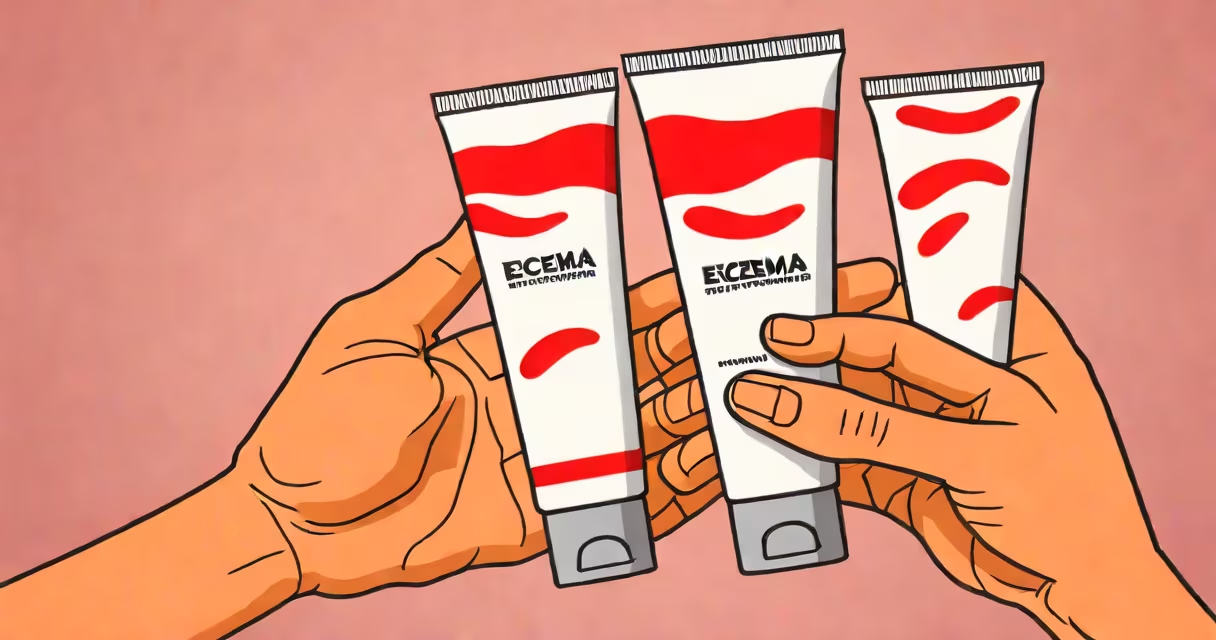
Lotion for eczema is a topical moisturizer designed to relieve dry, itchy skin caused by eczema. These lotions typically contain ingredients like ceramides, colloidal oatmeal, or hyaluronic acid to repair the skin barrier and reduce inflammation.
Eczema lotions work by hydrating the skin and repairing its natural moisture barrier. The outer layer of skin in people with eczema often lacks lipids that hold water in the skin. Moisturizers replenish these lipids, trapping water in the skin and reducing dryness and itching.
For example, ceramides are a key component of healthy skin. Many eczema lotions contain synthetic ceramides to replace what's lost in eczema-prone skin. Colloidal oatmeal, another common ingredient, has anti-inflammatory properties that help calm irritated skin.
| Type | Key Ingredients | Best For |
|---|---|---|
| Ceramide-based | Ceramides, cholesterol, fatty acids | Repairing the skin barrier |
| Colloidal oatmeal | Colloidal oatmeal, glycerin | Reducing inflammation |
| Hyaluronic acid | Hyaluronic acid, vitamin E | Deep hydration |
| Steroid-free | Zinc oxide, shea butter | Avoiding steroid side effects |
Eczema lotion should be applied daily, even when the skin isn't actively flaring. The National Eczema Association recommends using it immediately after bathing to lock in moisture. This routine helps prevent dryness and reduces the frequency of flare-ups.
Many people confuse eczema lotion with regular body lotion. While both hydrate the skin, eczema-specific formulas contain higher concentrations of active ingredients like ceramides and colloidal oatmeal. Regular lotions may not provide enough relief for eczema-prone skin.
One common mistake is assuming that thicker lotions are always better. While thick creams and ointments are effective, some people prefer lighter lotions for daily use. The best choice depends on individual skin type and preferences.
Another myth is that fragrance-free products are always necessary. While fragrances can irritate sensitive skin, some eczema lotions contain mild, hypoallergenic fragrances that don't trigger flare-ups. Always check product labels for potential irritants.
When selecting a lotion for eczema, look for products labeled "fragrance-free" and "non-comedogenic." These won't clog pores or irritate sensitive skin., opt for lotions with a high concentration of active ingredients like ceramides or colloidal oatmeal.
I once struggled with finding the right lotion for my eczema. After trying several products, I discovered that a ceramide-based lotion worked best for me. It reduced my dryness and itching within a week of consistent use.
For those experiencing eczema-related hair loss, choosing a gentle, non-greasy lotion is important. Applying it to the scalp can help soothe irritation without causing further damage.