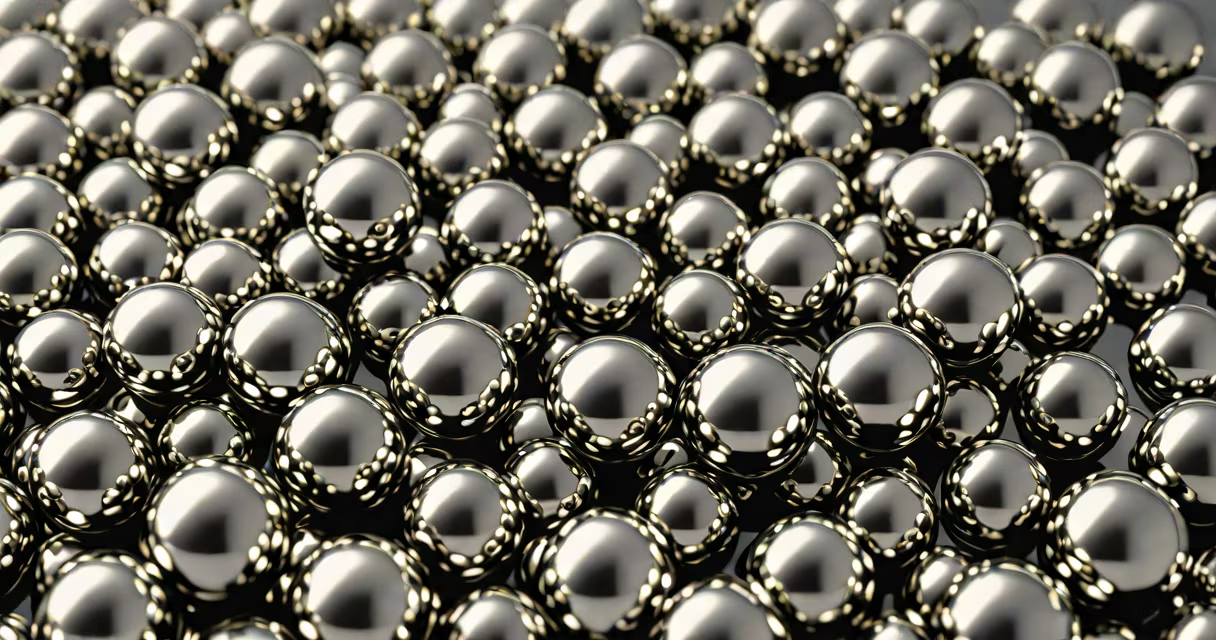
Mercury in solid form is the metal mercury when cooled below -38.83°C (-37.89°F), turning it from a liquid to a brittle, silver-gray solid. Unlike most metals, mercury remains liquid at room temperature due to its unique atomic structure.
Mercury is liquid at standard conditions because its atoms form weak bonds. When cooled below its freezing point, these bonds strengthen, causing it to solidify. This process is reversible-warming solid mercury above -38.83°C returns it to liquid form.
| Type | Description | Common Uses |
|---|---|---|
| Pure solid mercury | A brittle, silver-gray solid | Rarely used directly; mostly found in lab settings |
| Mercury alloys (amalgams) | Mixtures with other metals | Dental fillings, industrial applications |
| Mercury compounds | Chemical combinations with other elements | Pesticides, batteries, fluorescent lamps |
Solid mercury is rarely used directly due to its toxicity and difficulty in handling. However, mercury compounds and alloys have historical uses in industries like mining, medicine, and electronics. For example, mercury thermometers contain liquid mercury, but some older devices used solid mercury compounds for specific measurements.
Many people assume mercury is always liquid, but it can solidify under the right conditions. Another misconception is that solid mercury is safe-it is equally toxic as liquid mercury. The Environmental Protection Agency (EPA) warns against any direct contact with mercury, regardless of its state.
While working in a chemistry lab, I once witnessed mercury solidifying in a freezer set to -40°C. The transformation was subtle-a slight change in texture -but confirmed the metal's unusual properties. Handling it required extreme caution, reinforcing the importance of safety protocols around mercury.
Mercury in solid form is a fascinating yet hazardous substance. Understanding its behavior helps in safely managing this toxic metal, whether in industrial settings or everyday objects like thermometers. For more on handling hazardous materials, see our guide on corporate safety regulations.