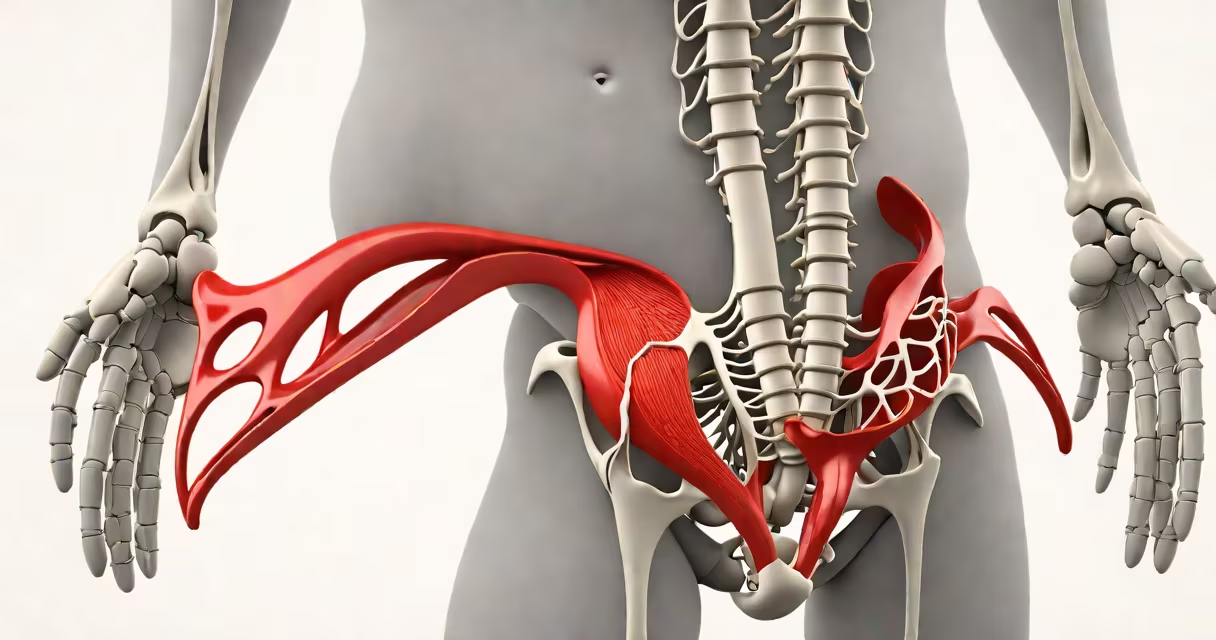
Psoas muscle dysfunction occurs when the psoas major, a key hip flexor, becomes overly tight, weak, or imbalanced, leading to pain and reduced mobility. This condition often stems from prolonged sitting, muscle imbalances, or injury.
The psoas major connects the lumbar spine to the femur, playing a important role in hip flexion, spinal stabilization, and posture. When dysfunctional, it can pull the lumbar spine into excessive arching, contributing to lower back pain.
Unlike other muscles, the psoas operates primarily in a shortened position during daily activities like sitting. Over time, this can lead to chronic tightness, a common form of dysfunction.
| Type | Characteristics | Common Causes |
|---|---|---|
| Tightness | Reduced flexibility, pulling the spine forward | Prolonged sitting, poor posture |
| Weakness | Poor core engagement, instability | Inactivity, muscle imbalances |
| Trigger Points | Localized pain, referred discomfort | Overuse, repetitive strain |
Symptoms include lower back pain, hip stiffness, and difficulty standing upright. Some people experience referred pain in the groin or thigh. Dysfunction can also contribute to knee pain due to altered gait mechanics.
A lesser-known symptom is anterior pelvic tilt, where the pelvis rotates forward, creating a pronounced arch in the lower back. This posture is often mistaken for general poor posture rather than a specific muscle issue.
Physical therapists diagnose psoas dysfunction through movement assessments and palpation. Treatment typically involves targeted stretching, strengthening exercises, and posture correction.
For example, the psoas stretch in lunge position helps release tightness. Strengthening the gluteal muscles can also alleviate strain on the psoas by improving pelvic alignment.
I once worked with a client who experienced chronic lower back pain for years. After identifying psoas tightness as the root cause, a combination of stretching and core-strengthening exercises resolved their symptoms within six weeks.
Regular movement breaks during prolonged sitting, proper lifting techniques, and core-strengthening exercises can prevent dysfunction. Yoga poses like the pigeon pose and warrior lunge also promote psoas flexibility.
According to Harvard Health, maintaining fitness and addressing muscle imbalances reduces the risk of psoas-related issues. The National Institute of Arthritis and Musculoskeletal and Skin Diseases recommends regular physical activity to maintain muscle health.