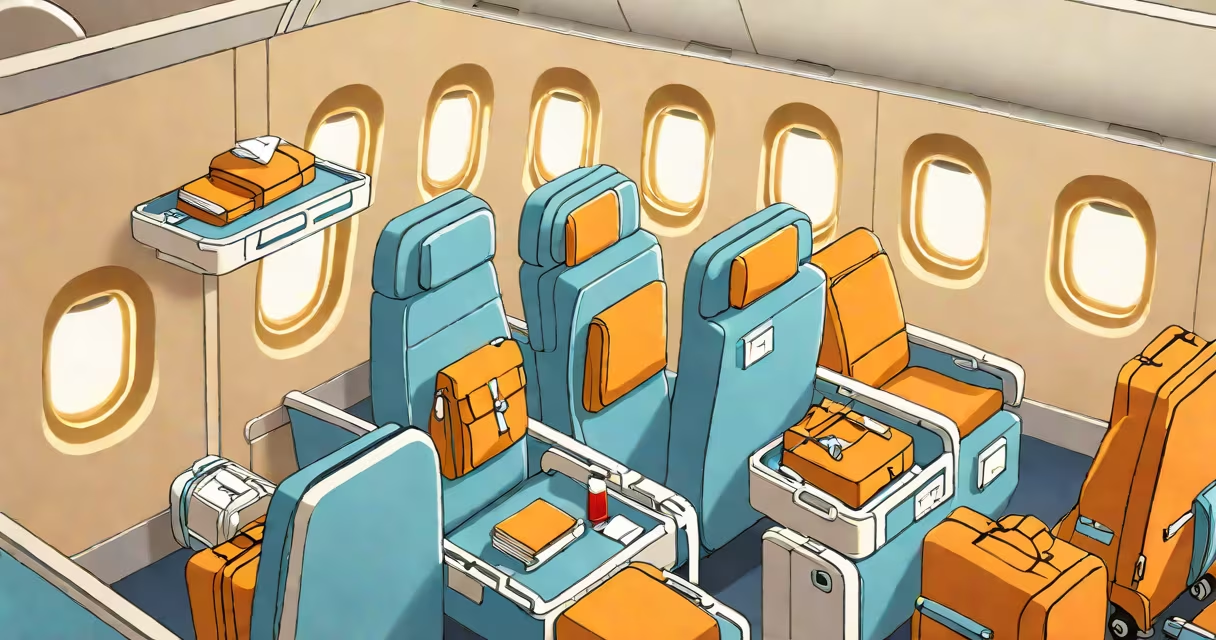
Carry on baggage requirements are size limits and weight restrictions set by airlines for luggage that fits in overhead bins or under seats. These rules vary by airline and aircraft type.
Airlines enforce these rules to maximize cabin space and safety. Most measure dimensions (length × width × height) and weight. Some budget airlines charge extra for carry ons exceeding limits.
| Type | Typical Dimensions | Notes |
|---|---|---|
| Personal Item | 16 × 12 × 6 inches | Small purse, laptop bag, or briefcase |
| Standard Carry On | 22 × 14 × 9 inches | Fits in overhead bin |
| Oversized Carry On | Varies | Some airlines allow larger bags as checked luggage |
Rules apply during boarding and security checks. Airlines enforce them to prevent overcrowding and ensure emergency evacuation routes remain clear. Many airports have size-check boxes near check-in counters.
Another mistake is assuming all airlines have the same rules. Budget airlines often have stricter limits than full-service carriers. For instance, Spirit Airlines' carry on must fit 18 × 14 × 8 inches, while Delta's allowance is 22 × 14 × 9 inches.
Pack versatile clothing and essentials in your carry on. Use packing cubes to organize items and save space. Place valuables, medications, and travel documents in your personal item for easy access.
When in doubt, measure your bag before traveling. Bring a small backpack or tote as a backup personal item. Always check your airline's specific requirements before packing.
I once traveled with a slightly oversized carry on and had to gate-check it, paying a last-minute fee. Now I always verify dimensions beforehand to avoid surprises.