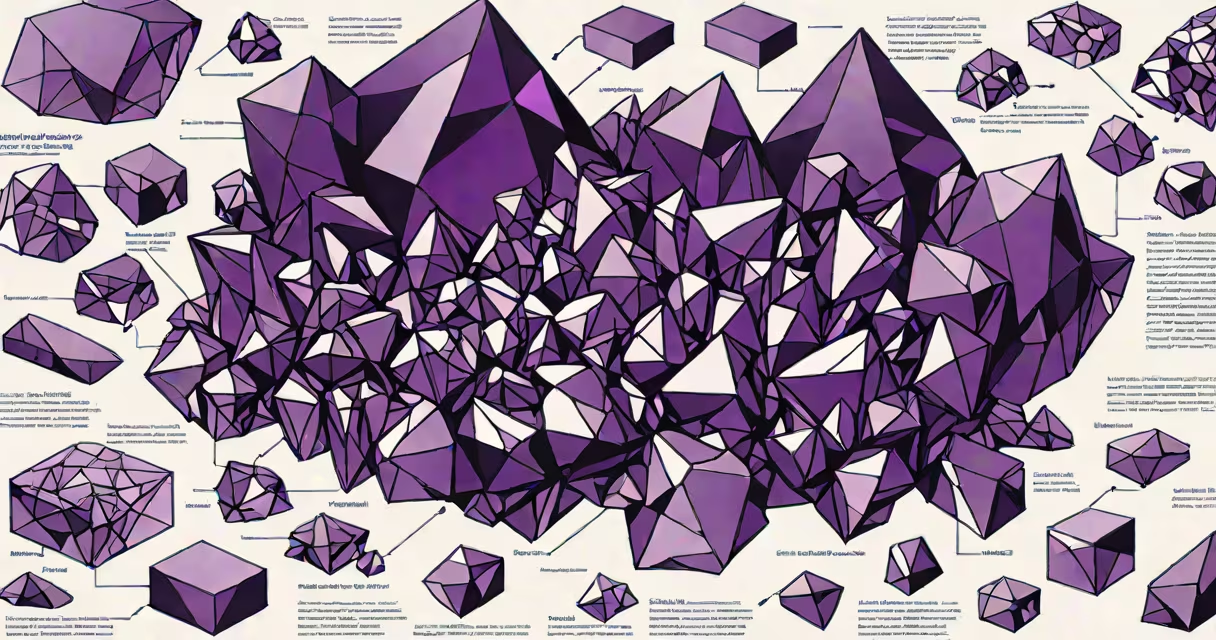
Amethyst is a violet variety of quartz known for its beauty and perceived metaphysical properties. This semi-precious stone has been valued throughout history for both decorative purposes and spiritual significance.
Amethyst forms in geodes and clusters, typically found in volcanic rock. Its purple color ranges from pale lavender to deep violet, determined by iron impurities and natural irradiation. The stone ranks 7 on the Mohs hardness scale, making it durable enough for jewelry and carvings.
| Type | Characteristics | Common Uses |
|---|---|---|
| Common Amethyst | Typical purple hue, often with reddish tones | Jewelry, decorative objects |
| Rose de France | Lighter purple, often from Brazil | High-end jewelry |
| Ametrine | Combination of amethyst and citrine | Unique jewelry pieces |
Amethyst appears in jewelry, home decor, and spiritual practices. Ancient Greeks believed it prevented intoxication, while medieval Europeans used it in religious artifacts. Today, it's popular in meditation and crystal healing.
Many confuse amethyst with other purple stones like sugilite or charoite. True amethyst always shows quartz's hexagonal crystal structure under magnification. A common misconception is that all purple stones are amethyst-this overlooks similar-looking minerals with different compositions.
Amethyst's durability makes it ideal for rings and bracelets. It's also carved into spheres, pyramids, and other shapes for decorative purposes. In crystal healing, practitioners place amethyst near beds or wear it as jewelry to promote calmness.
One surprising fact: amethyst was once as valuable as ruby or sapphire until large deposits were discovered in Brazil in the 19th century. The largest amethyst cluster ever found weighed over 2.5 tons and was discovered in Canada's Thunder Bay.
I've seen amethyst clusters firsthand at mineral shows. The deep purple hues are striking, especially when sunlight hits the crystal faces. The stones feel cool to the touch and often have a glassy luster that makes them appear almost liquid.
Some believe amethyst has magical powers to prevent drunkenness-a myth originating from ancient Greece. While scientifically unproven, this belief persists in folklore. Others think all purple stones are amethyst, overlooking similar minerals like sugilite or charoite.
Another mistake is assuming amethyst's color indicates quality. Deeper hues don't necessarily mean better stone-clarity and cut play larger roles in value. Heat treatment can alter amethyst's color, sometimes making lighter stones appear more vibrant.
Amethyst is more than a pretty purple stone. Its uses range from jewelry-making to spiritual practices, with a rich history spanning cultures. Whether you appreciate it for its beauty or perceived metaphysical properties, amethyst remains a fascinating gemstone with enduring appeal.
For more on the origins of the name amethyst, see here.