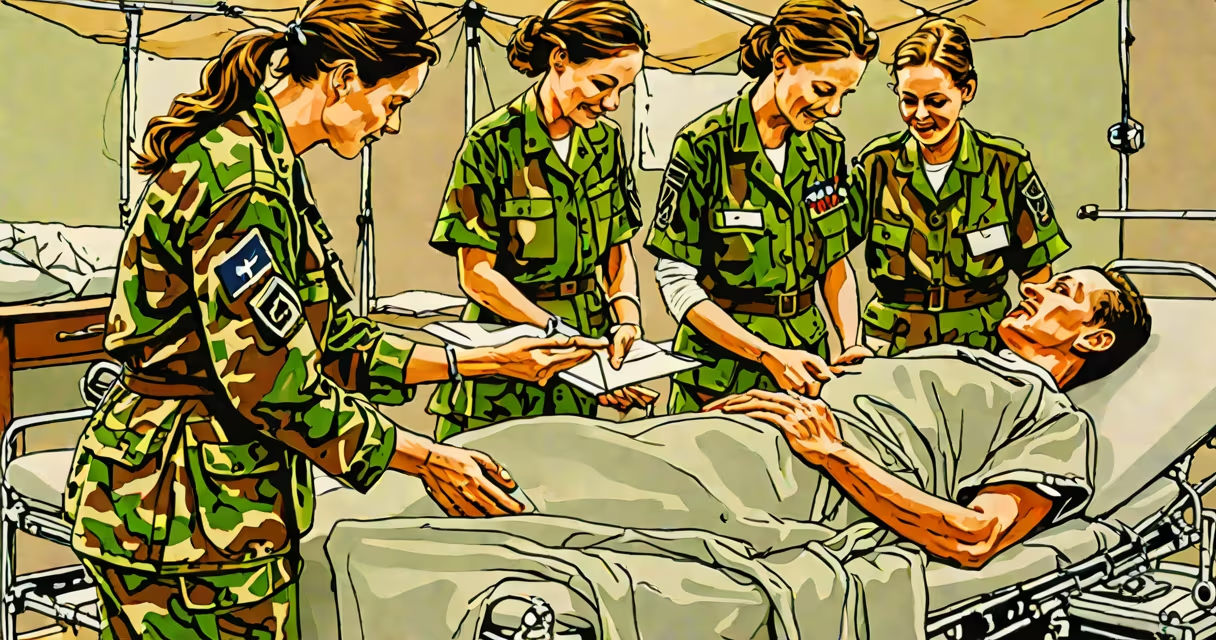
Army nurses are registered nurses who serve in the U.S. Army Medical Department, providing healthcare to soldiers and their families. They perform clinical duties in diverse environments, from combat zones to military hospitals.
Army nurses handle many of the same tasks as civilian nurses, including assessing patients, administering treatments, and coordinating care. However, they also face unique challenges:
According to the U.S. Army, nurses make up the largest healthcare profession in the military, with over 6,000 active-duty members.
Army nurses work in various settings:
| Setting | Example Locations | Typical Duties |
|---|---|---|
| Combat Support Hospitals | Deployed locations worldwide | Trauma care, surgical support, critical care |
| Military Treatment Facilities | Fort Bragg, Walter Reed National Military Medical Center | Primary care, specialty clinics, inpatient care |
| Field Hospitals | Forward operating bases | Emergency stabilization, evacuation coordination |
A 2022 report from the RAND Corporation found that military nurses deploy at higher rates than other healthcare professions, with 22% of Army nurses having deployed compared to 15% of physicians.
Beyond general nursing duties, army nurses may specialize in areas like:
I once observed army nurses at a base clinic transitioning from routine vaccinations to preparing for deployment exercises within hours - their adaptability was notable.
Army nurses complete:
The Army Nurse Corps requires a bachelor's degree in nursing and passing the NCLEX-RN exam, similar to civilian requirements. However, military nurses also undergo weapons training and learn to operate in chemical, biological, radiological, and nuclear environments.
Many people confuse army nurses with:
Unlike civilian nurses, army nurses must maintain physical fitness standards and be prepared to relocate on short notice. The American Nurses Association notes that military nurses often serve longer hours and face more unpredictable schedules than their civilian counterparts.