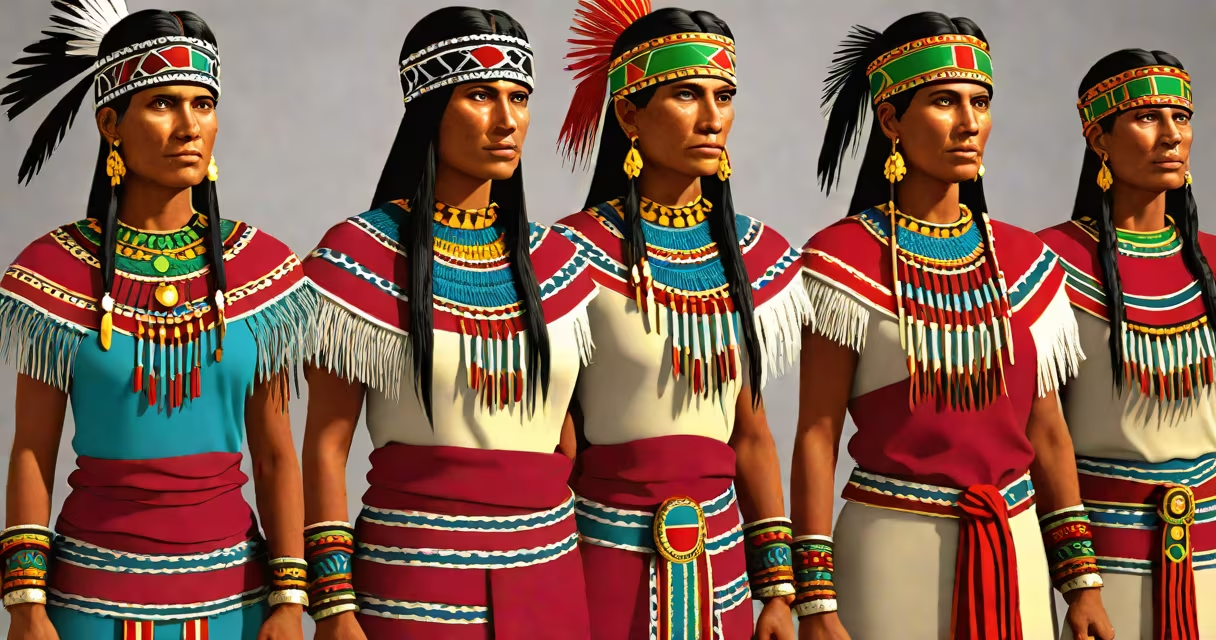
The Incas wore clothing primarily made from llama and alpaca wool, consisting of tunics, cloaks, and headbands designed for both practicality and social status.
The Incas used wool from llamas and alpacas, which were abundant in the Andes. These materials provided warmth and durability, essential for the harsh mountain climate. They also utilized cotton for garments in warmer regions. The Incas developed sophisticated weaving techniques, creating complex patterns and textures. Their loom-based weaving produced both utilitarian and decorative textiles.
| Garment Type | Description | Primary Use |
|---|---|---|
| Uncu | A rectangular tunic worn by men, fastened at the shoulder with a brooch called a tupu. | Daily wear, work, and ceremonies |
| Aclla | A cloak or shawl worn by women, often decorated with colorful patterns. | Protection from cold, ceremonial attire |
| Lliklla | A rectangular cloth draped over the shoulders, secured with a pin. | Everyday wear, status symbol |
| Chusma | A headband worn by both men and women, often adorned with feathers or ribbons. | Functional and decorative headwear |
Clothing in the Inca Empire was not just functional but also carried significant social and cultural meanings. The quality and design of garments indicated a person's status within the community. For example, the Inca emperor, or Sapa Inca, wore highly decorated garments made from the finest materials, often featuring complex gold and silver embroidery. Commoners wore simpler, more practical clothing.
Textiles were also used in religious ceremonies and as offerings to the gods. The Incas believed that the act of weaving had spiritual significance, and many rituals were performed to ensure the success of textile production. The most skilled weavers were often women chosen for their expertise and dedication to the craft.
One common misconception is that the Incas wore feathered headdresses similar to those of other Mesoamerican cultures. While they did use feathers for decoration, their headwear was generally simpler, consisting of headbands or caps. Another misconception is that Inca clothing was uniformly simple and plain. In reality, their textiles were highly sophisticated, with complex patterns and designs that conveyed social status and cultural identity.
I once visited a museum exhibit featuring reconstructed Inca garments. Seeing the complex weaving and vibrant colors firsthand was a striking reminder of the advanced textile techniques the Incas employed. The exhibit included a detailed explanation of how each garment was made and its significance in Inca society.
The Inca's mastery of textile production left a lasting legacy in the Andean region. Many of their techniques and patterns continue to influence traditional Peruvian clothing today. Modern artisans still use ancient methods to create textiles that are both beautiful and functional. The Inca's contributions to textile arts are recognized worldwide, and their garments are displayed in museums as examples of pre-Columbian craftsmanship.