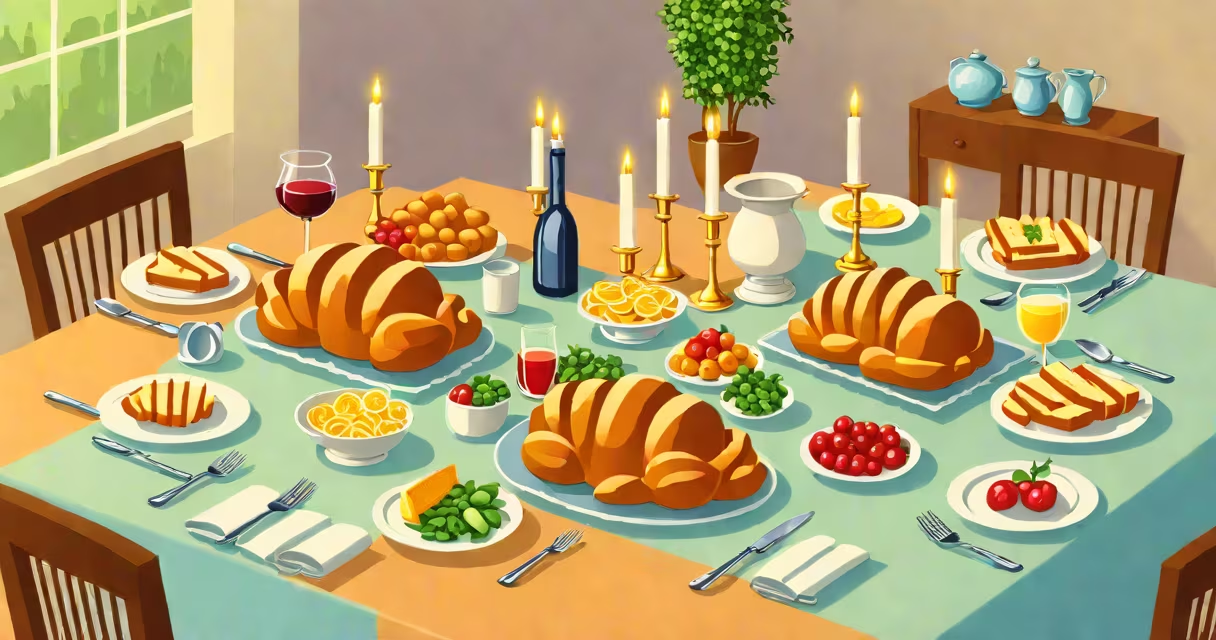
On Saturdays, Jewish people observe Shabbat, a day of rest and spiritual renewal from sunset Friday to sunset Saturday. This practice follows biblical commandments outlined in the Torah and includes specific rituals, restrictions, and family gatherings.
Shabbat begins at sundown on Friday and ends at nightfall on Saturday. During this time, Jewish people abstain from work and engage in activities that promote rest, reflection, and connection with family and community. The day is marked by special meals, prayer services, and the lighting of candles.
Shabbat is structured around several key components:
Shabbat is a key part of Jewish life, rooted in the biblical narrative of God's creation of the world in six days, followed by a day of rest. Observing Shabbat is one of the Ten Commandments, emphasizing the importance of rest, gratitude, and spiritual connection. The day provides a weekly pause from the routine of daily life, allowing for reflection, prayer, and family bonding.
According to Rabbi Joseph Telushkin in his book "Shabbat: A Guide to Observance and Celebration," Shabbat is "a day of delight, a day of rest, a day of holiness." It is a time to disconnect from the stresses of the week and reconnect with one's faith, family, and community.
One common misconception is that Shabbat is solely about restrictions. While there are guidelines about what activities are prohibited, the focus is on positive experiences-rest, prayer, and joy. Another misunderstanding is that Shabbat is only for religious Jews. In reality, many secular Jews observe Shabbat in their own way, whether through family meals, cultural traditions, or simply taking a break from work.
For example, some families might gather for a Shabbat dinner even if they don't follow all the religious customs. Others might use the day to spend time in nature, read, or engage in creative activities that don't involve work.
When I visited a friend's home on a Friday evening, I witnessed the beauty of Shabbat firsthand. The table was set with a white cloth, candles, and a bottle of wine. My friend's mother lit the candles, recited the blessing, and covered her eyes-a tradition meant to focus entirely on the spiritual moment. The warmth and peace of the evening were palpable, offering a stark contrast to the hectic pace of the workweek.
Shabbat is observed by Jewish communities worldwide, though customs may vary slightly. In Israel, for instance, public transportation stops running, and many businesses close. In the United States, some cities have eruvs-symbolic boundaries that allow certain activities on Shabbat that would otherwise be restricted. These variations reflect the adaptability of Jewish traditions to different cultures and environments.
Shabbat is a day of rest, reflection, and spiritual connection that plays a central role in Jewish life. By observing Shabbat, Jewish people honor biblical commandments while creating space for family, community, and personal growth. Whether through prayer, family meals, or simply unplugging from the demands of daily life, Shabbat offers a meaningful pause in the weekly cycle.