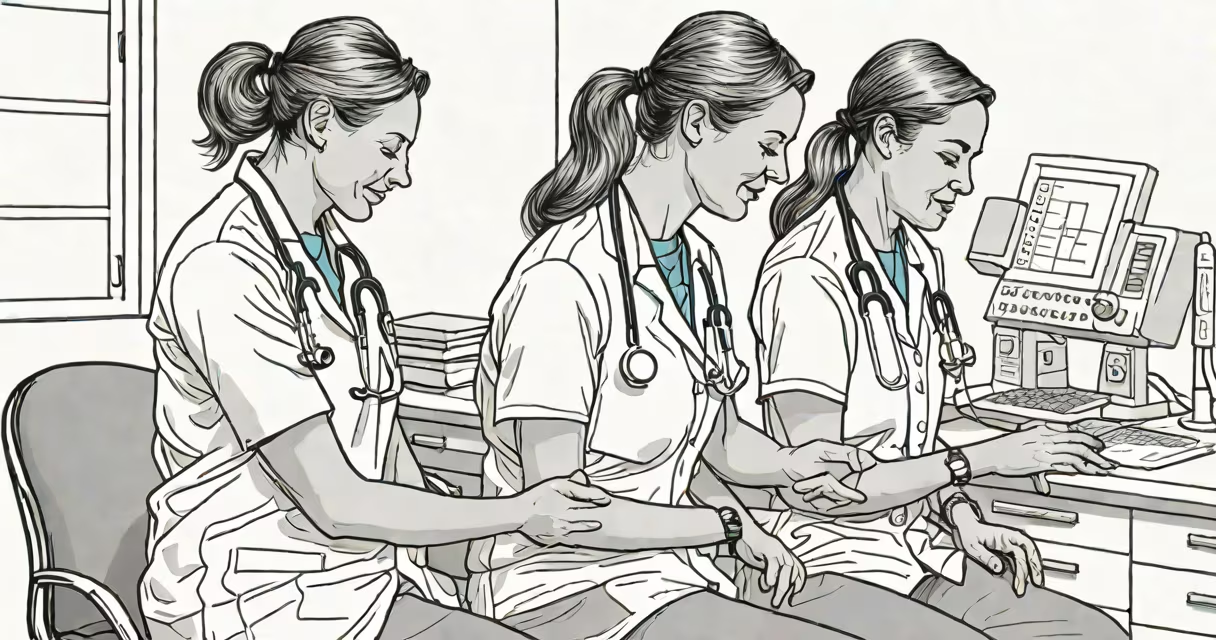
Medical assistants perform clinical and administrative tasks in outpatient settings, supporting doctors and nurses while ensuring smooth clinic operations. Their work spans patient care, record-keeping, and office management.
Medical assistants split their time between direct patient care and office tasks. Clinical duties include taking important signs, preparing patients for exams, and administering medications. Administrative work involves scheduling appointments, updating medical records, and handling billing.
| Category | Examples |
|---|---|
| Patient Care | Drawing blood, removing stitches, applying bandages |
| Administrative | Answering phones, filing insurance forms, managing supplies |
| Clinical Support | Sterilizing instruments, setting up exam rooms, assisting with procedures |
Most medical assistants work in physician offices (57%), according to the U.S. Bureau of Labor Statistics. Others work in hospitals, chiropractic clinics, or specialty practices like dermatology or cardiology. Their role varies by setting.
Many assume medical assistants only handle clerical work. In reality, certified medical assistants often perform complex clinical tasks under physician supervision. For example, in my experience shadowing at a family practice, I saw an assistant prepare a patient for an EKG test-a procedure requiring specific training.
By handling routine tasks, medical assistants allow doctors to focus on diagnosis and treatment. A 2021 study in the Journal of the American Medical Association found clinics with medical assistants had 20% more patient throughput. Their efficiency keeps healthcare running smoothly.