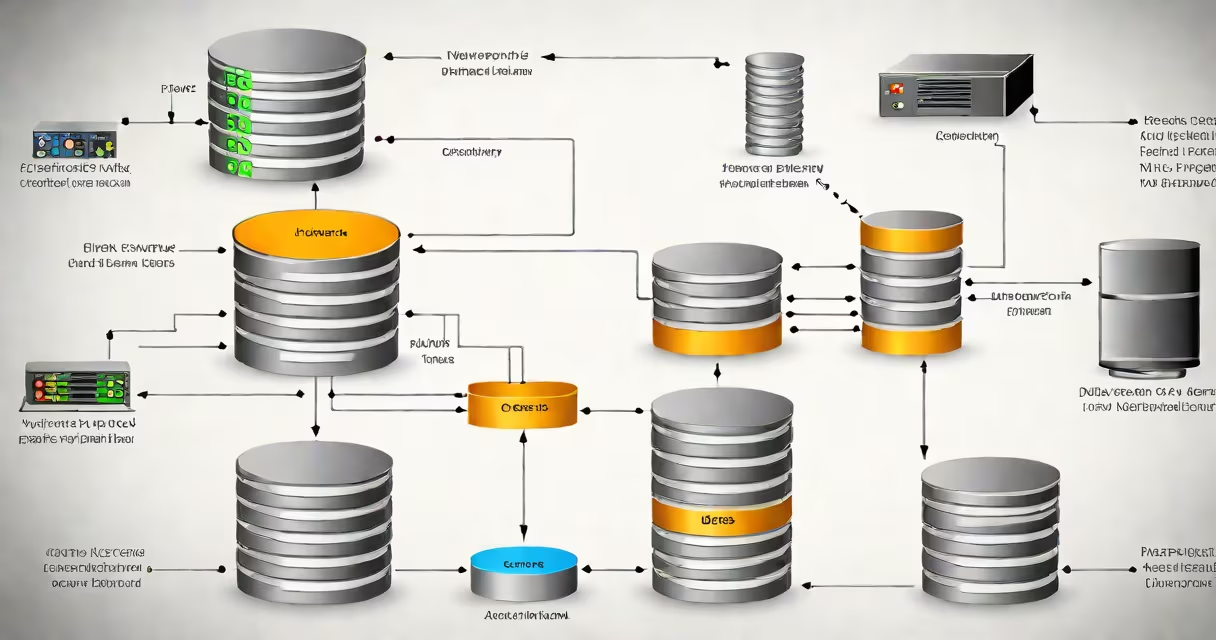
A database collects, stores, and organizes data so applications can quickly retrieve and manipulate it. Databases power everything from e-commerce sites to airline reservation systems.
Databases use structured tables to store records. When an application requests data, the database processes queries using operators like SELECT, INSERT, and UPDATE. The database management system (DBMS) handles these operations while maintaining data integrity.
For example, when you search for a product on Amazon, the site's database retrieves matching items from millions of records in milliseconds. The DBMS ensures your query doesn't slow down other users' searches.
| Type | Structure | Use Cases |
|---|---|---|
| Relational (SQL) | Tables with rows and columns | Banking systems, inventory management |
| Document (NoSQL) | JSON-like documents | Content management systems |
| Key-value | Simple key-value pairs | Caching layers, session storage |
Relational databases dominate enterprise applications due to their strict structure and ACID compliance. NoSQL databases handle unstructured data better but sacrifice some consistency guarantees.
Many people confuse databases with file systems. While both store data, databases offer faster retrieval, better organization, and simultaneous access for multiple users. A file system can't efficiently handle thousands of concurrent requests like a database can.
Let's examine a typical database operation: retrieving customer orders. The application sends a query like:
SELECT * FROM orders WHERE customer_id = 12345;
The database:
This process happens in microseconds for well-designed databases.
I once designed a database for a small e-commerce site. By properly normalizing the data model, I reduced storage requirements by 30% while improving query performance. The key was separating product information from order details into different tables.
Databases enable applications to handle vast amounts of data efficiently. Without them, modern web applications and enterprise systems wouldn't function. They provide the foundation for data-driven decision making across industries.
Database operators use specialized commands to manage data. Learn more about database operators and their functions.