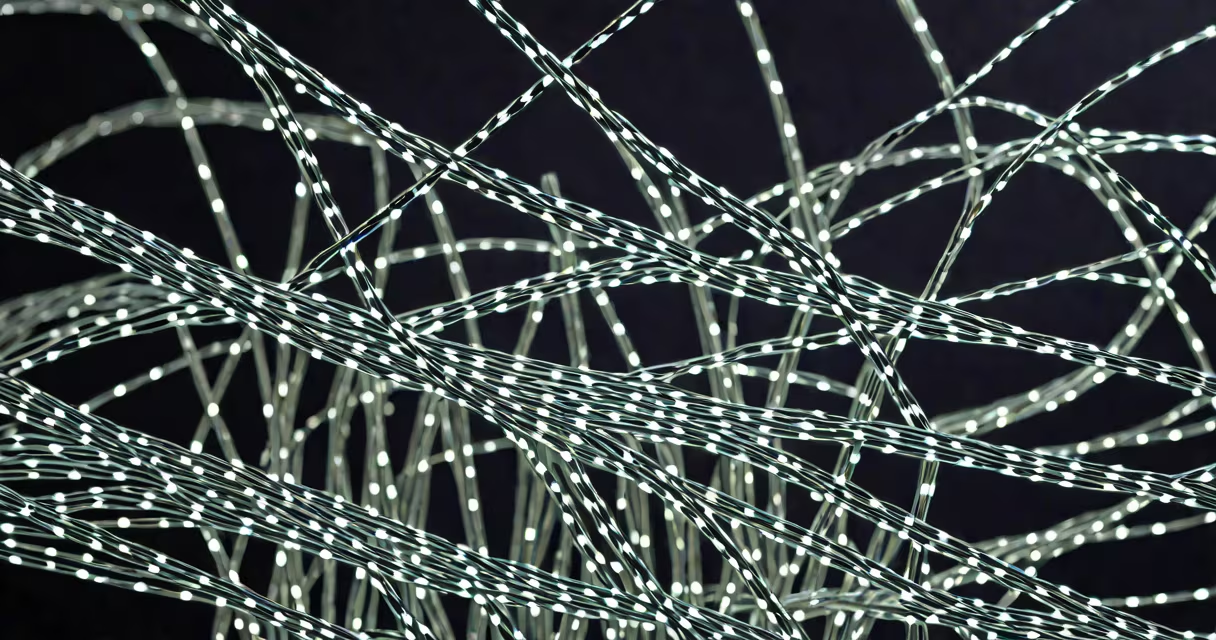
A fibre optic cable transmits data as pulses of light through thin glass or plastic strands called optical fibres. This technology enables high-speed internet, telecommunications, and other data-intensive applications.
Fibre optic cables convert electrical signals carrying data into light signals. These light pulses travel along the optical fibres with minimal loss over long distances. At the receiving end, the light signals convert back into electrical signals for processing.
The core principle relies on total internal reflection: light bounces off the cladding surrounding each fibre, keeping the signal contained and reducing signal degradation. This allows fibre optic cables to transmit data faster and farther than traditional copper cables.
Fibre optic cables consist of several key components:
| Type | Description | Typical Applications |
|---|---|---|
| Single-mode fibre | Thinner core (9 microns) for long-distance communication | Telecommunications, CATV networks, long-haul internet |
| Multimode fibre | Thicker core (50-62.5 microns) for shorter distances | Local area networks, premises wiring, data centres |
| Plastic optical fibre | Made of plastic for cost-effective short-range use | td>Automotive, industrial sensing, decorative lighting
Most modern internet installations use single-mode fibre for its superior performance over long distances. Multimode fibre remains popular for shorter runs within buildings.
Fibre optic cables enable various critical applications:
One common misconception is that fibre optic cables are only used for internet connections. In reality, they support many applications beyond digital communications, including medical devices, industrial sensors, and even lighting systems.
When I helped install fibre optic internet in my home, I was surprised to learn that the installation crew had to lay new cables all the way from the nearest junction box - a distance of about 1.5 miles. This highlights both the durability and the precision required for fibre optic installations.
Fibre optic cables offer several key advantages:
According to the International Telecommunication Union, fibre optic networks can support data rates up to 100 times greater than traditional copper-based networks over the same distance.
Many people confuse fibre optic cables with other technologies:
Another frequent misunderstanding is that fibre optic cables are easily broken. In reality, when properly installed with protective jackets and conduits, they can withstand significant physical stress and environmental factors.
Researchers continue to push the boundaries of fibre optic technology:
As demand for data continues to grow, fibre optic technology will remain essential for meeting global communication needs. For more details on how this technology works, see our guide on what is fibre optic.