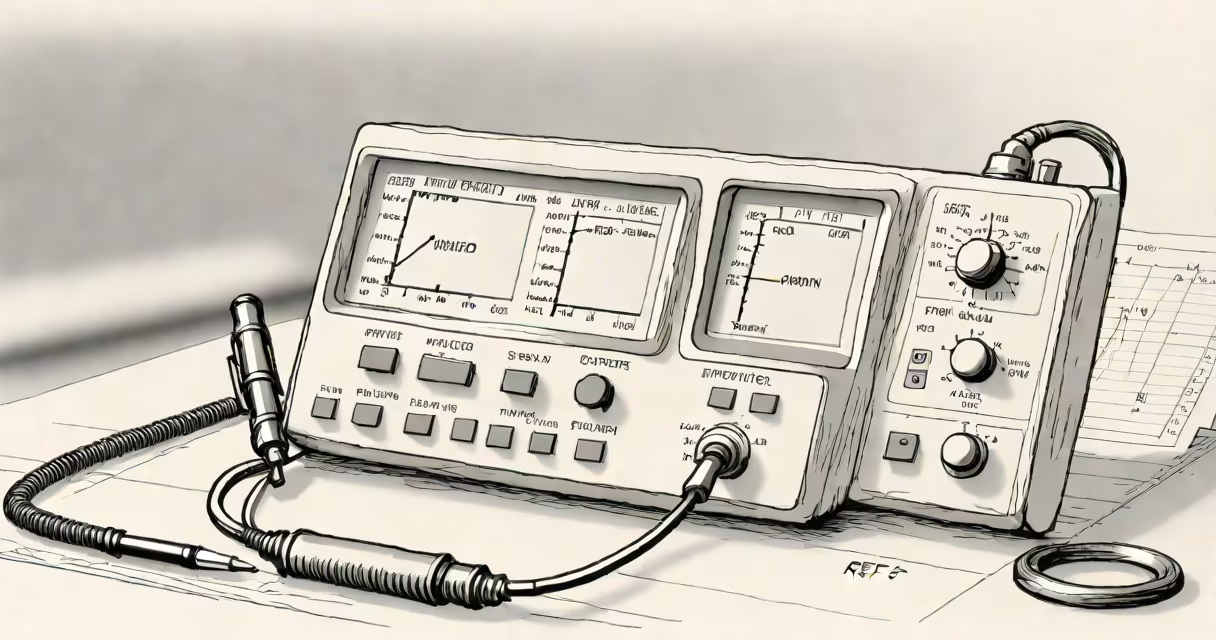
A high RF (radio frequency) reading indicates elevated exposure to electromagnetic fields, typically from wireless devices or power lines. This exceeds safe limits set by regulatory agencies.
RF measurements gauge electromagnetic field strength using units like volts per meter (V/m) or watts per square meter (W/m²). Meters detect frequencies between 3 kHz and 300 GHz, common in Wi-Fi, cell towers, and microwaves.
| Source Type | Typical Frequency Range | Example Devices |
|---|---|---|
| Low-frequency RF | 3 kHz - 300 MHz | AM radio, shortwave radio |
| High-frequency RF | 300 MHz - 300 GHz | FM radio, TV, mobile phones, Wi-Fi |
Prolonged exposure to high RF levels may cause biological effects, including tissue heating and potential DNA damage. The World Health Organization classifies RF fields as "possibly carcinogenic" based on limited evidence.
Regulatory bodies like the FCC and ICNIRP set exposure limits to protect public health. For instance, the FCC's limit for general population exposure is 0.6 V/m for frequencies between 30 MHz and 300 GHz.
Many people confuse RF with other electromagnetic phenomena, such as static electricity or visible light. Unlike ionizing radiation (like X-rays), RF does not have enough energy to remove electrons from atoms, but it can still affect biological tissues through heating.
Another misconception is that all wireless technologies emit the same level of RF. In reality, exposure varies widely. A smartphone held close to the body emits more RF than a Wi-Fi router across a room.
When testing RF levels near a cell tower, measurements typically decrease with distance. At 10 feet from the base, readings might exceed 1 V/m, but at 300 feet, they often drop below 0.1 V/m. This demonstrates how distance reduces exposure.
I once measured RF levels in an office with multiple Wi-Fi routers. Readings peaked at 0.5 V/m near the routers but dropped to 0.05 V/m in adjacent rooms. This highlighted how containment strategies can mitigate exposure.
Understanding RF levels helps you make informed decisions about exposure and safety. While moderate exposure is generally safe, prolonged high levels warrant caution.