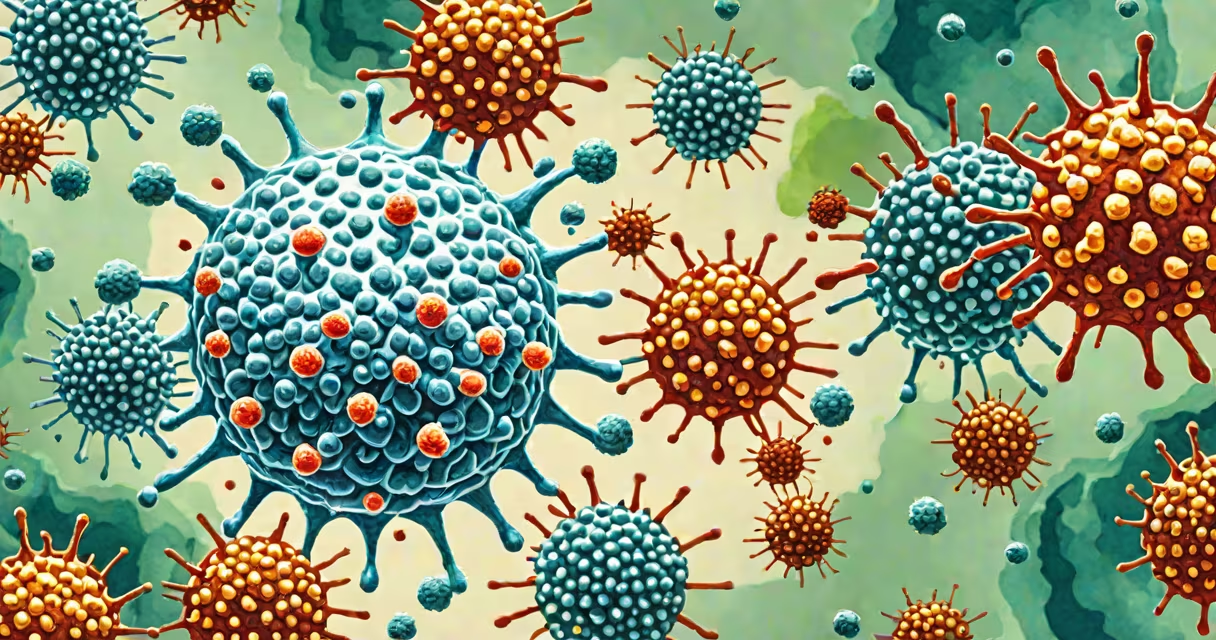
T cells are a type of white blood cell that play a central role in your immune system by identifying and eliminating pathogens like viruses, bacteria, and even cancer cells. They coordinate immune responses, remember past infections, and regulate immune activity.
T cells develop in the thymus gland and circulate through your blood and lymph nodes. When they encounter a pathogen, they bind to antigens (foreign molecules) presented on infected cells. This triggers a response: some T cells kill infected cells directly, while others activate other immune cells.
| Type | Function | Example |
|---|---|---|
| Cytotoxic T Cells | Destroy infected or cancerous cells | Killing virus-infected cells |
| Helper T Cells | Activate other immune cells | Stimulating B cells to produce antibodies |
| Memory T Cells | Remember past infections for faster response | Recognition of the same flu virus years later |
| Regulatory T Cells | Prevent overactive immune responses | Suppressing autoimmune reactions |
T cells patrol throughout your body, concentrating in lymphoid organs like the spleen and lymph nodes. They're important for fighting infections, preventing cancer, and maintaining immune balance. Without them, your body would struggle to recognize and eliminate threats efficiently.
For example, during a viral infection like COVID-19, cytotoxic T cells target and destroy infected lung cells, while helper T cells coordinate the immune response. Memory T cells ensure that if you encounter the same virus again, your immune system responds faster and more effectively.
Many people confuse T cells with B cells, another type of lymphocyte. While both are essential for immunity, B cells primarily produce antibodies, whereas T cells directly attack infected cells or regulate immune responses., T cells are not stem cells; they are specialized immune cells derived from hematopoietic stem cells in the bone marrow.
Another misconception is that T cells only fight infections. In reality, they also play a role in autoimmune diseases, such as multiple sclerosis, where they mistakenly attack healthy tissue. Research into T cell function has led to therapies like CAR-T cell therapy, which engineers a patient's own T cells to fight cancer.
I once observed a lab demonstration where fluorescently labeled T cells were tracked as they migrated toward infected cells in a petri dish. The precision and speed of their movement were astonishing, reinforcing how critical they are to immune defense.
T cells are important components of your immune system, working tirelessly to protect you from diseases. Their ability to recognize, remember, and respond to threats makes them indispensable for adaptive immunity. Understanding their role helps explain why vaccines work and how immune therapies are developed.