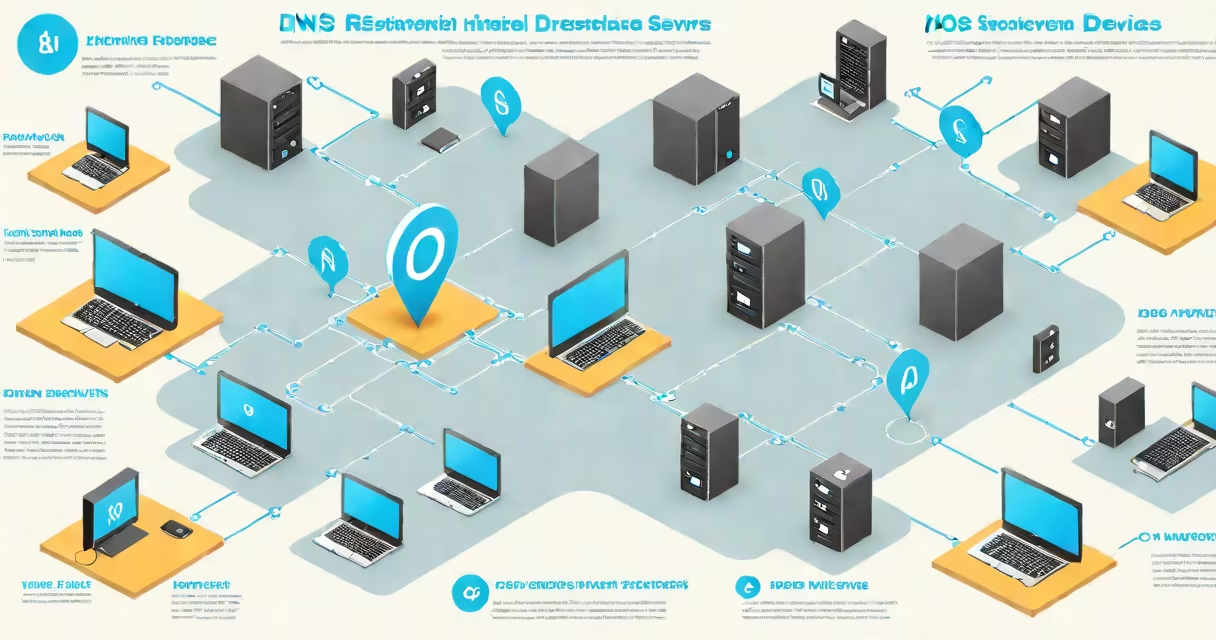
The Domain Name System (DNS) is the internet's phonebook, translating human-readable domain names like google.com into machine-readable IP addresses like 142.250.190.46. This translation process enables browsers to load internet resources.
When you enter a URL, your device contacts a DNS resolver, which queries the DNS hierarchy to find the correct IP address. The process typically involves multiple steps:
DNS operates through several key components working together:
| Component | Function |
|---|---|
| Domain name | Human-readable web address (e.g., example.com) |
| IP address | Numerical identifier for devices (e.g., 192.0.2.1) |
| DNS resolver | First stop in lookup process (often provided by ISP) |
| Root servers | Top-level servers directing queries to appropriate TLD servers |
| TLD servers | Manage top-level domains (.com, .org, etc.) |
| Authoritative servers | Contain actual DNS records for specific domains |
Many people confuse DNS with other internet protocols or assume it's part of web hosting. DNS is actually separate from:
A common misconception is that DNS stores website content. In reality, it only translates domain names to IP addresses - the actual website files reside on web servers.
DNS is critical because it bridges the gap between human language and machine communication. Without DNS, users would need to memorize numerical IP addresses for every website, making the internet far less accessible. The system also enables important features like:
Most users interact with DNS indirectly, but understanding its function helps troubleshoot connectivity issues and make informed choices about internet services.