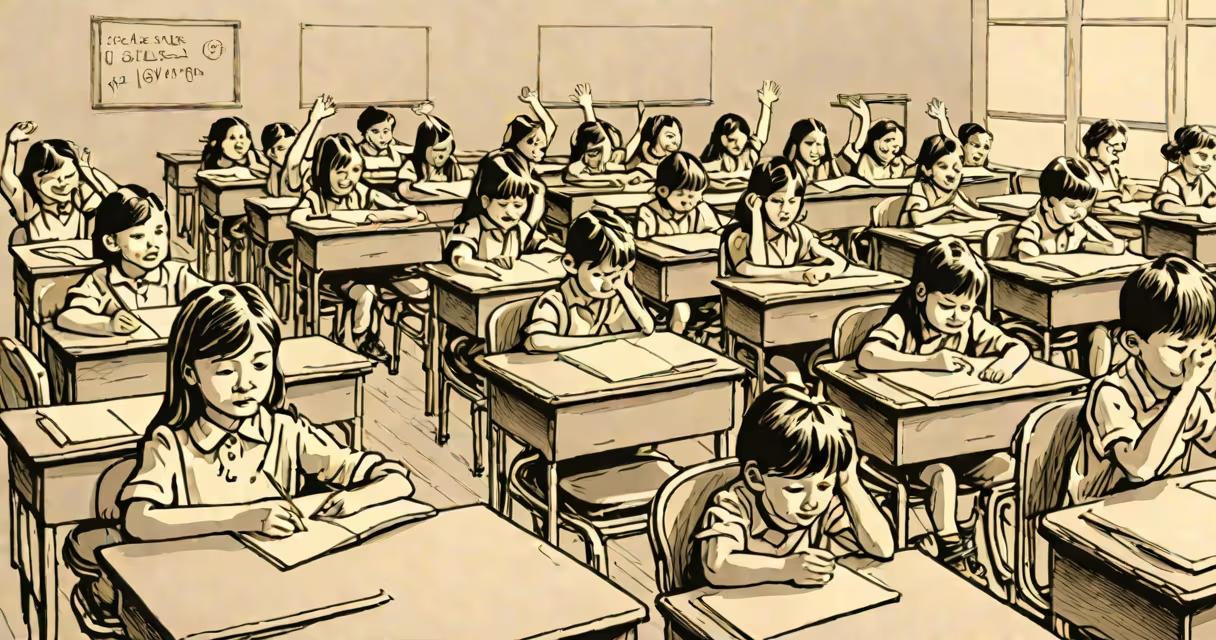
Elementary education is formal schooling for children ages 5-11, typically covering kindergarten through fifth grade. It focuses on foundational academic, social, and motor skills through structured lessons and play-based learning.
Elementary schools divide instruction into core subjects: reading, writing, math, science, and social studies. Teachers use hands-on activities, group work, and individualized instruction to engage young learners. Daily schedules often include recess and lunch breaks to support physical and social development.
Elementary schools exist worldwide, though structures vary. In the U.S., they prepare children for middle school by building literacy, numeracy, and critical thinking. Many countries start elementary education at age 6, while others begin at 4 or 5. The U.S. system emphasizes early intervention to address learning gaps.
According to the National Center for Education Statistics, about 90% of U.S. children attend public elementary schools. Private and charter schools account for the remaining 10%, offering alternatives for families seeking specialized curricula or smaller class sizes.
Many assume elementary education is just childcare with basic academics. In reality, it includes structured lessons in core subjects, social-emotional learning, and physical education. Teachers also assess students' developmental progress to identify learning disabilities early.
At Oakridge Elementary, kindergarteners spend 30 minutes daily on phonics, using letter tiles to build words. First graders rotate through math stations, practicing addition with manipulatives. By fifth grade, students analyze short stories and solve multi-step word problems, demonstrating growth in complex thinking.
I visited a third-grade science class where students tested how different materials affect plant growth. They recorded data weekly, then presented findings to classmates-a project combining science, math, and public speaking skills.