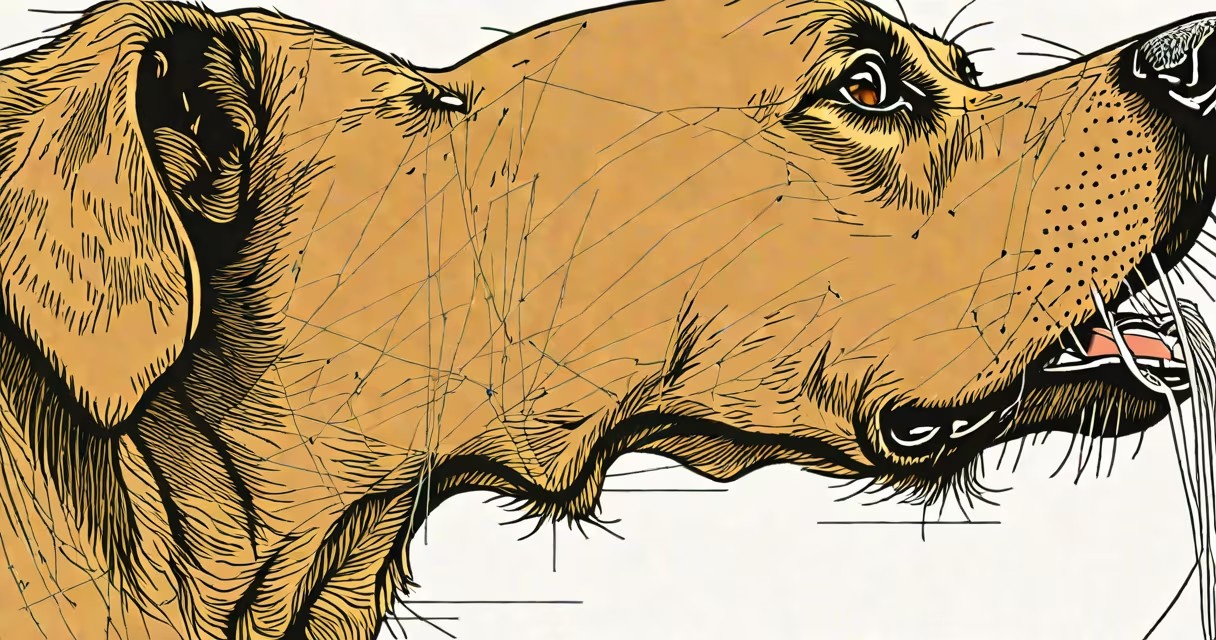
Dogs smell your breath to gather information about your health, emotions, and recent activities. This behavior stems from their useful sense of smell, which is 10,000 to 100,000 times more acute than humans'. When a dog sniffs your breath, they're analyzing scent particles that reveal details about your diet, metabolism, and even potential illnesses.
Dogs detect scents using their nasal cavity and an additional olfactory organ called the vomeronasal organ. When a dog inhales, air passes through the nasal cavity, where scent molecules bind to receptor cells. These receptors send signals to the brain, allowing the dog to identify and interpret smells. The vomeronasal organ further analyzes chemical compounds, particularly those related to pheromones and other biological markers.
Dogs smell breath for several key reasons:
Many people assume dogs smell breath primarily to check for food or to be playful. While these factors sometimes play a role, the primary motivation is information gathering. Dogs don't just smell your breath-they analyze it like a complex puzzle, piecing together clues about your well-being and recent experiences.
Another misconception is that dogs only smell breath when something is wrong. In reality, they do this routinely as part of their natural investigative behavior. If you notice your dog suddenly sniffing your breath more frequently, it might warrant attention, but occasional sniffing is normal.
When a dog smells your breath, they're likely detecting a mix of volatile organic compounds (VOCs). These include:
| Compound Type | Possible Source | Example |
|---|---|---|
| Ketones | Metabolic processes | Diabetes, ketogenic diet |
| Ammonia | Protein breakdown | Kidney issues, high-protein meals |
| Sulfur compounds | Bacterial activity | Morning breath, gum disease |
I noticed my own dog exhibiting this behavior more frequently after I switched to a new vitamin regimen. The change in my breath chemistry-likely due to altered metabolic byproducts-seemed to pique his curiosity. He would sniff my breath several times a day, often tilting his head as if processing the new information.
Dogs can also detect changes in human breath related to conditions like cancer. While they aren't medical diagnostic tools, their ability to sense these subtle shifts highlights the sophistication of their olfactory system.
Understanding why dogs smell your breath offers a fascinating glimpse into their sensory world. This behavior isn't just quirky-it's a sophisticated form of communication and investigation that reveals the depth of canine intelligence.