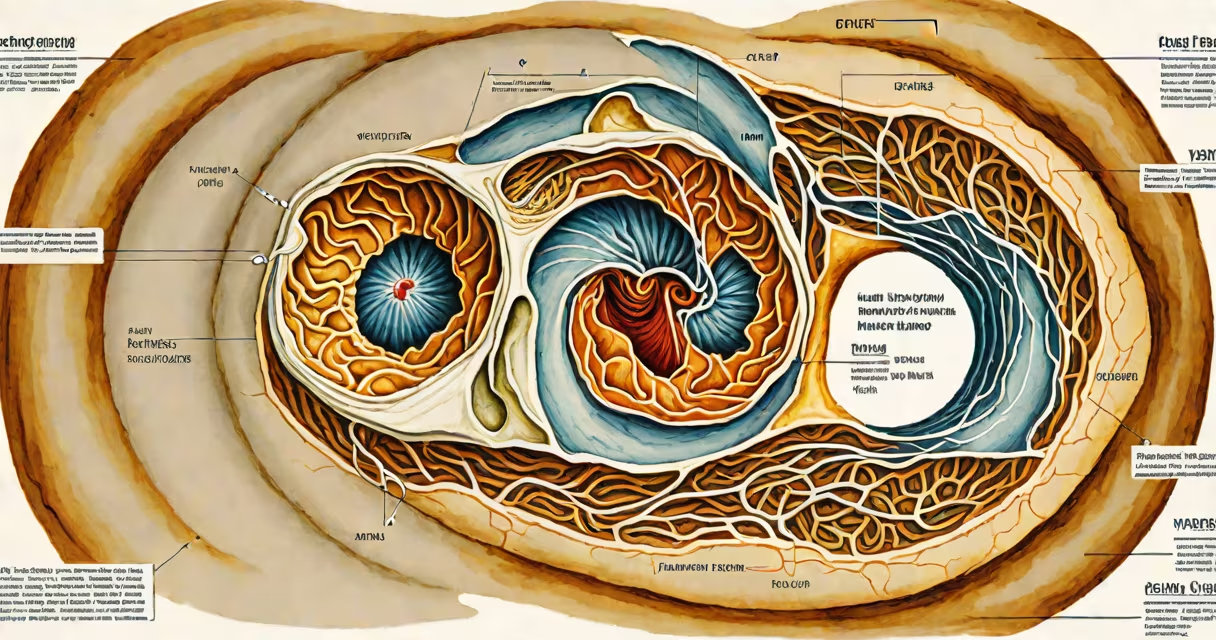
Vertigo occurs when the brain receives false signals about the body's position and movement, typically due to inner ear problems or central nervous system issues. These false signals create a sensation of spinning or tilting even when stationary.
The inner ear's vestibular system contains fluid-filled canals and tiny calcium crystals that detect head movements. When these crystals dislodge and float freely, they disrupt normal signaling to the brain. The brain then struggles to reconcile conflicting information from the eyes, inner ears, and sensory receptors, resulting in vertigo episodes.
Vertigo falls into two primary categories:
| Type | Cause | Duration |
|---|---|---|
| Peripheral Vertigo | Inner ear problems | Minutes to hours |
| Central Vertigo | Brain issues | Longer episodes |
Benign paroxysmal positional vertigo (BPPV) is the most common form of peripheral vertigo, accounting for about 50% of cases according to the American Academy of Neurology.
Vertigo episodes often occur during head movements like looking up, bending over, or turning in bed. Stress and fatigue can also trigger symptoms. Many people experience vertigo when changing positions suddenly, such as sitting up from lying down.
People often confuse vertigo with motion sickness or general dizziness. Unlike motion sickness, vertigo isn't caused by movement itself but by incorrect signals about movement. It's also distinct from lightheadedness, which typically results from low blood pressure or reduced blood flow to the brain.
Another common misconception is that vertigo always indicates a serious medical condition. While it can signal inner ear problems or neurological issues, many cases of vertigo resolve on their own or with simple treatments like canalith repositioning maneuvers.
I once experienced vertigo while working at a height. The sensation of spinning combined with the actual height created a terrifying feedback loop. After seeing a specialist, I learned it was likely caused by sudden head movements and was treatable with specific exercises.