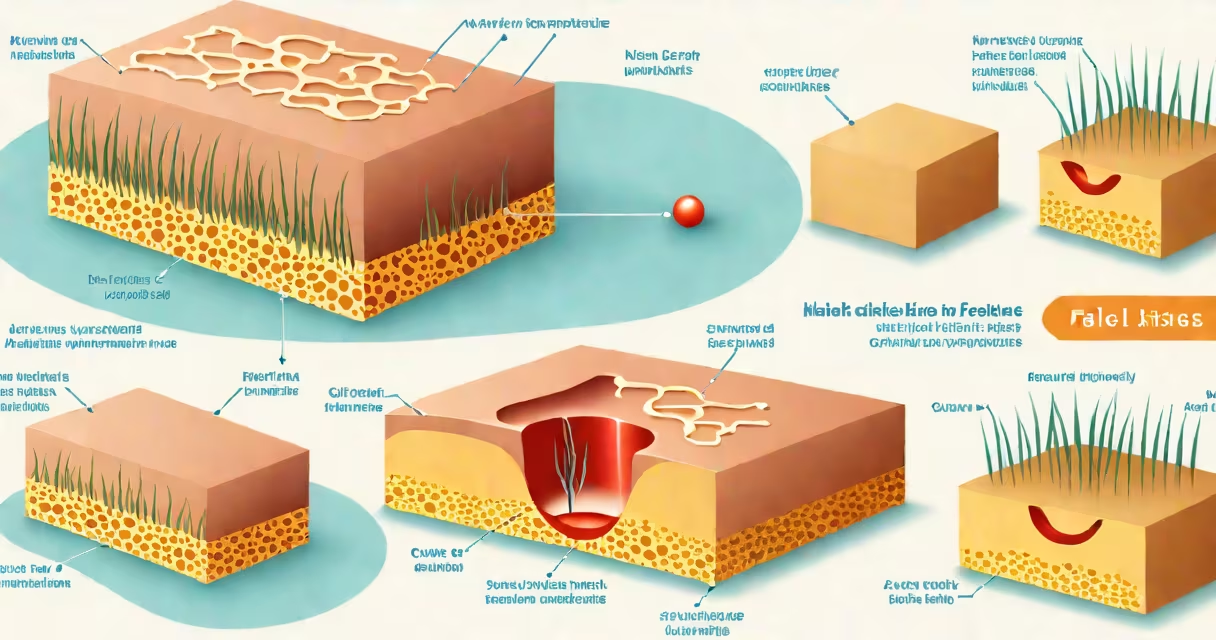
Hair loss happens when hair follicles shrink due to genetic factors, hormone imbalances, or external damage. This process, called miniaturization, eventually stops new hair growth.
Each hair grows from a follicle, a tiny pocket in the skin. The growth cycle has three phases: anagen (growth), catagen (transition), and telogen (rest). A healthy follicle repeats this cycle 25 times or more over a lifetime.
Genetics determine hair color, texture, and growth patterns. For many people, genes also control hair loss. Male pattern baldness, for example, is linked to the androgen receptor gene on the X chromosome. Women can inherit hair loss genes from either parent.
Dihydrotestosterone (DHT), a derivative of testosterone, plays a key role in hair loss. DHT binds to receptors in hair follicles, shrinking them over time. This explains why men with higher DHT levels often experience more severe hair loss. Some medications, like atenolol, may also contribute to hair thinning.
Nutritional deficiencies, stress, and certain medical conditions can trigger temporary hair loss. For example, low iron levels or vitamin B12 deficiency can cause diffuse thinning. Severe stress may push hair follicles into the resting phase prematurely, leading to shedding weeks later.
Contrary to popular belief, frequent hair washing or wearing hats does not cause hair loss. Nor do hats worsen existing hair loss. However, tight hairstyles like braids or ponytails can contribute to traction alopecia, a type of hair loss caused by pulling forces.