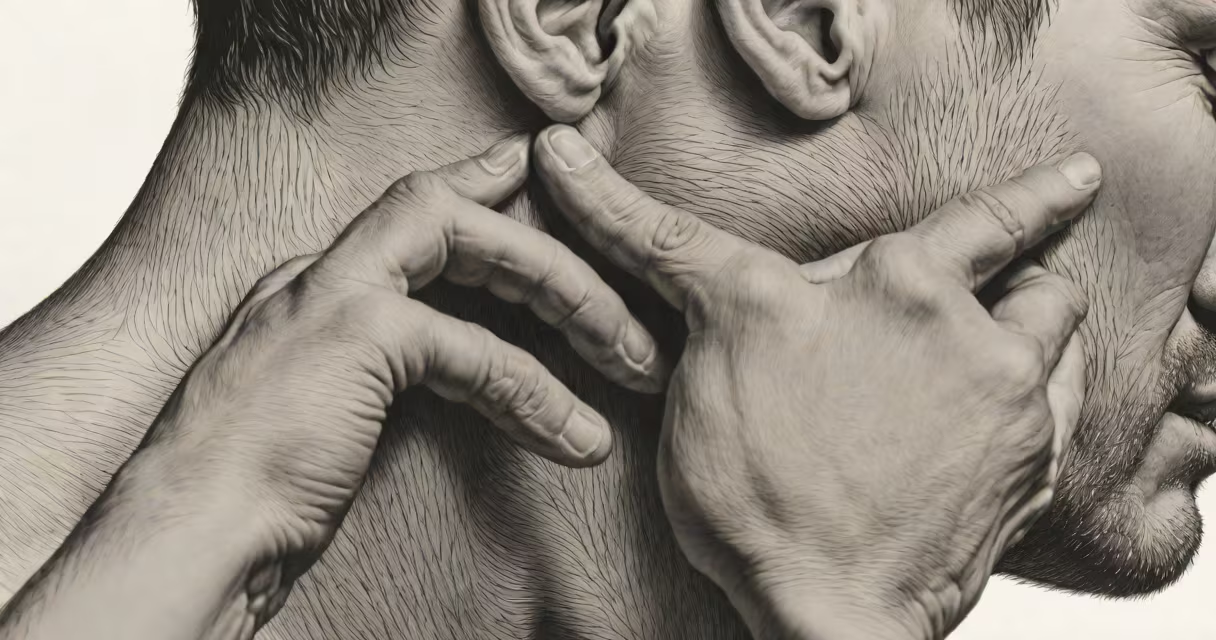
A muscle knot in your neck is a tight, tender spot in a muscle that feels like a small, hard ball under the skin. These knots, also called trigger points, cause localized pain, stiffness, and reduced mobility in the affected area.
How Muscle Knots Develop
Muscle knots form when muscle fibers and connective tissue undergo contractions and don't relax. This can happen due to stress, poor posture, repetitive motions, or injury. For example, sitting at a desk with your head forward for hours can strain the muscles in your neck, leading to knots.
Main Types of Muscle Knots
There are two primary types of muscle knots:
Active trigger points: These cause pain even when not touched. The pain may radiate to other areas, such as the shoulders or upper back.
Latent trigger points: These don't hurt unless pressure is applied. They may limit movement or cause stiffness.
Common Symptoms
The most common symptom of a muscle knot in the neck is localized pain. Other symptoms include:
Stiffness or reduced range of motion in the neck
Headaches, especially tension headaches
Radiating pain to the shoulders, upper back, or arms
A tender, hard lump under the skin
Muscle weakness or fatigue
What Muscle Knots Are Often Mistaken For
People often confuse muscle knots with other conditions, such as:
Cervical spine issues: Problems with the vertebrae or discs in the neck can cause similar pain. However, these usually involve nerve-related symptoms like tingling or numbness.
Arthritis: Neck arthritis may cause stiffness and pain, but it typically worsens over time and affects joint movement more than muscle tissue.
Pinched nerves: A pinched nerve in the neck can cause sharp, shooting pain, but it often includes radiating numbness or weakness in the arms.
How to Treat Muscle Knots
Most muscle knots respond well to self-care techniques. Common treatments include:
Massage: Gently rubbing the knot can help relax the muscle fibers. A professional massage therapist can also target deeper knots.
Heat therapy: Applying heat to the area increases blood flow and relaxes tight muscles.
Stretching: Gentle neck stretches can relieve tension and improve flexibility.
Posture correction: Adjusting your posture, especially while sitting, can prevent future knots.
If muscle knots persist or cause severe pain, consult a healthcare professional. Chronic muscle knots may require physical therapy or medical treatment.