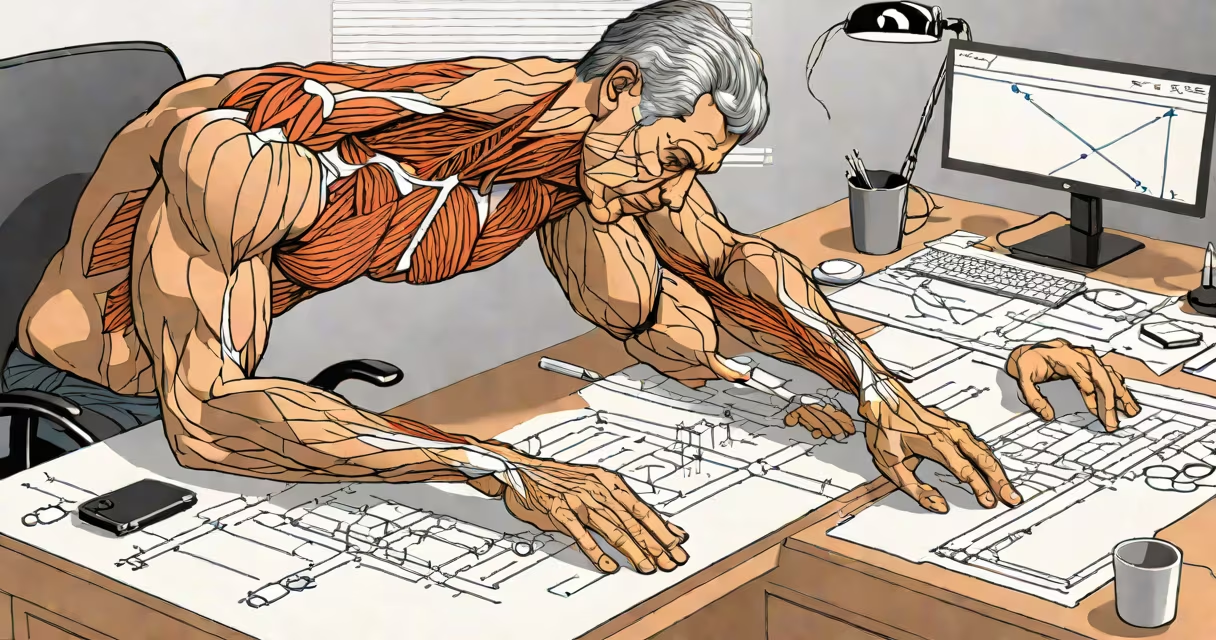
Muscle pain in your neck occurs when the muscles supporting your head and spine become strained, tense, or injured. This discomfort ranges from mild stiffness to sharp, debilitating pain.
Neck muscles support your head's weight (about 10-12 pounds) and allow movement. Overuse, poor posture, or sudden strain can cause micro-tears in muscle fibers, triggering inflammation and pain. For example, sleeping in an awkward position often leads to stiffness upon waking.
| Type | Common Causes | Duration |
|---|---|---|
| Muscle tension | Stress, prolonged screen use, poor posture | Hours to days |
| Muscle spasm | Dehydration, electrolyte imbalance, sudden movement | Minutes to hours |
| Whiplash | Car accidents, sports injuries | Weeks to months |
Most cases stem from everyday habits. Poor posture while working at a computer forces your neck into a forward position, overstretching muscles. Stress also triggers muscle tension, creating a feedback loop of pain and anxiety. Even alcohol consumption can contribute-dehydration from drinking may worsen muscle cramps.
I noticed my neck pain worsened after long meetings with my laptop propped on my lap. Adjusting my workspace to eye level reduced the strain.
Consult a healthcare provider if pain persists beyond a few days, spreads to arms, or includes numbness/tingling. These symptoms may indicate nerve compression or other serious conditions. A doctor can rule out issues like herniated discs or arthritis.
For persistent issues, physical therapy or ergonomic adjustments may help. If muscle spasms occur frequently, check hydration levels and electrolyte balance.
While occasional stiffness is normal, recurring or severe muscle pain in your neck warrants attention. Addressing posture, stress, and hydration can prevent most cases. If symptoms persist, seek medical advice to rule out underlying conditions.