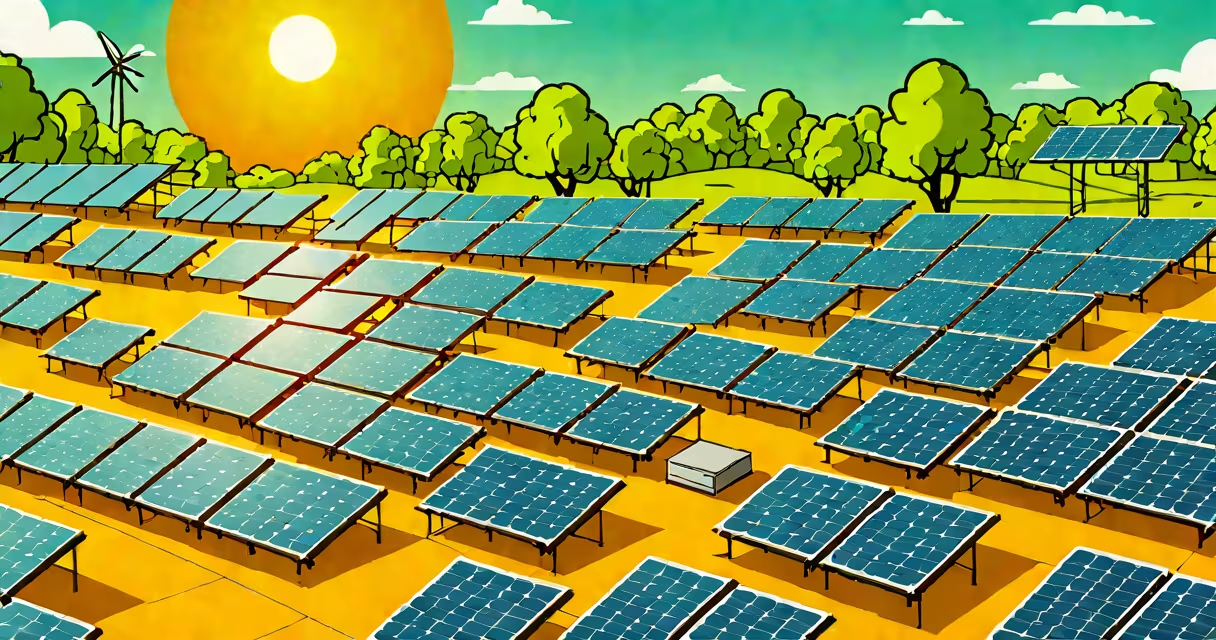
Solar energy waste refers to the unused or lost energy in photovoltaic (PV) systems due to inefficiencies in generation, transmission, and storage. While solar power is clean, about 15-30% of its potential energy goes to waste.
Solar panels convert sunlight into electricity, but they don't capture all available sunlight. Dust, clouds, and improper alignment reduce efficiency. Even high-quality panels only convert 15-22% of sunlight into electricity. The rest becomes heat, which can further reduce performance.
Transmission losses occur when generated electricity travels through wires to homes or businesses. About 5-8% of energy dissipates as heat during this process. Storage systems like batteries also introduce inefficiencies, losing 5-15% of stored energy over time.
| Type | Cause | Typical Loss (%) |
|---|---|---|
| Generation Inefficiency | Panel material limitations, shading, temperature | 15-30% |
| Transmission Loss | Electrical resistance in wiring | 5-8% |
| Storage Loss | Battery degradation, charging/discharging cycles | 5-15% |
Many assume solar energy waste is negligible because solar power is renewable. However, inefficiencies exist at every stage. Some believe solar panels last forever, but their efficiency degrades by 0.5-1% annually. Proper maintenance and upgrades can mitigate this.
Another myth is that solar farms waste large amounts of land. In reality, solar farms can coexist with agriculture through agrivoltaics, where panels are installed high enough to allow farming underneath.
Regular cleaning improves panel efficiency by up to 15%. Optimizing panel angles and orientations maximizes sunlight capture. Microinverters, which convert DC to AC at each panel, reduce transmission losses compared to traditional string inverters.
Energy storage solutions like lithium-ion batteries help store excess energy for later use. Smart grids balance supply and demand, reducing wasted energy. Recycling old solar panels recovers valuable materials like silicon and silver, reducing waste.
I once visited a solar farm that used AI-driven robotic cleaners to maintain panels. The system increased energy output by 12% compared to manual cleaning. This shows how technology can cut solar energy waste.
While solar power is cleaner than fossil fuels, inefficiencies still impact its sustainability. Reducing waste makes solar systems more cost-effective and environmentally friendly. According to the National Renewable Energy Laboratory, improving efficiency by just 5% could generate billions of additional kilowatt-hours annually.