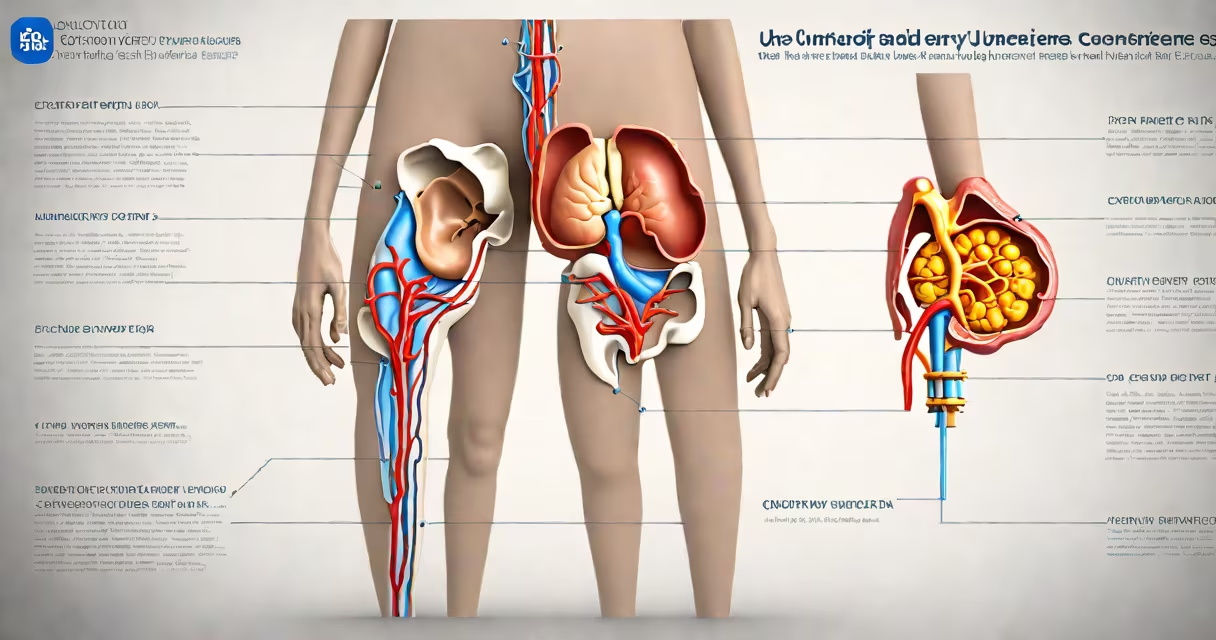
Urinary incontinence refers to the involuntary leakage of urine. There are five main types, each with distinct causes and symptoms. The most common are stress, urge, mixed, overflow, and functional incontinence.
The bladder stores urine until the brain signals it's time to empty. Incontinence occurs when this process is disrupted. Muscles in the pelvic floor support the urethra, which stays closed until urination. Weakness in these muscles or nerve damage can cause leakage.
Each type of incontinence has specific characteristics:
| Type | Cause | Symptom |
|---|---|---|
| Stress incontinence | Weak pelvic floor muscles | Leakage during physical activity |
| Urge incontinence | Overactive bladder muscles | Sudden, intense need to urinate |
| Mixed incontinence | Combination of stress and urge | Symptoms of both types |
| Overflow incontinence | Bladder obstruction or nerve damage | Frequent dribbling |
| Functional incontinence | Physical or cognitive impairment | Inability to reach toilet in time |
People often mistake stress incontinence for urge incontinence. Stress incontinence involves leakage during physical exertion, while urge incontinence involves sudden urges to urinate. Both can occur together in mixed incontinence.
My grandmother experienced urge incontinence. She would suddenly need to use the restroom and often didn't make it in time. Her doctor prescribed medication to relax her bladder muscles, which reduced her symptoms.
Treatment varies by type. Stress incontinence may improve with pelvic floor exercises. Urge incontinence can be managed with medications or bladder training. Overflow incontinence might require addressing the underlying obstruction. Functional incontinence benefits from environmental modifications to make toilets more accessible.