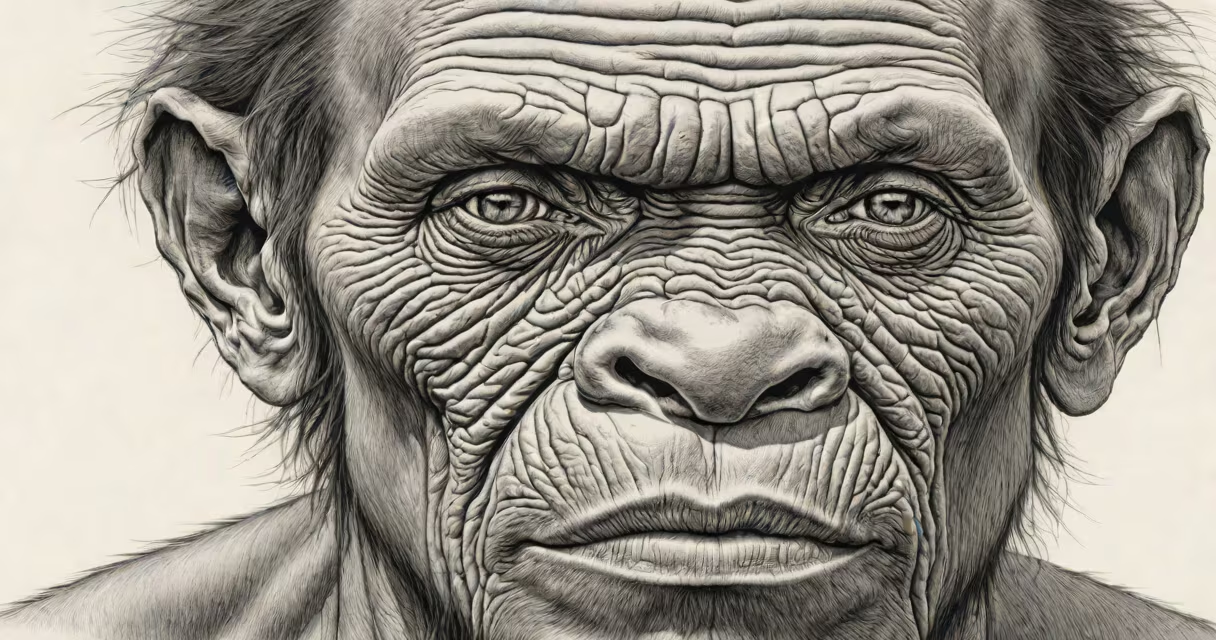
The first Homo sapiens had a blend of modern and primitive traits, including a prominent brow ridge, a rounded skull, and a chin. They resembled both Neanderthals and modern humans, with key differences in skull shape and facial structure.
Early Homo sapiens exhibited several distinct characteristics:
While sharing some similarities with Neanderthals, early Homo sapiens had key differences. Neanderthals had a more solid skeleton, a larger nose for cold climates, and lacked a prominent chin. In contrast, early Homo sapiens had a more gracile skeleton and a more modern facial structure.
The oldest known fossils of Homo sapiens, discovered in Jebel Irhoud, Morocco, date back approximately 300,000 years. These fossils reveal a mix of modern and archaic features, providing insight into the evolutionary transition. For example, the Jebel Irhoud fossils have a rounded skull but retain a prominent brow ridge, indicating their intermediate stage in human evolution.
| Feature | Homo sapiens | Neanderthals | Homo erectus |
|---|---|---|---|
| Skull Shape | Rounded | Long and low | Long and low |
| Facial Structure | Less protruding | td>More protrudingModerately protruding | |
| Brow Ridge | Present but small | Prominent | Prominent |
| Jaw | Gracile | Solid | Solid |
Understanding the appearance of early Homo sapiens helps scientists trace the evolutionary path of modern humans. It highlights the gradual changes that occurred over hundreds of thousands of years, leading to the diverse human populations we see today. For instance, the transition features in skulls shows how environmental and social factors influenced human evolution.
One fascinating aspect is how early Homo sapiens coexisted and interacted with other hominin species, such as Neanderthals. Genetic evidence shows that interbreeding occurred, contributing to the genetic diversity of modern humans. This interaction is important for understanding the complex web of human ancestry.