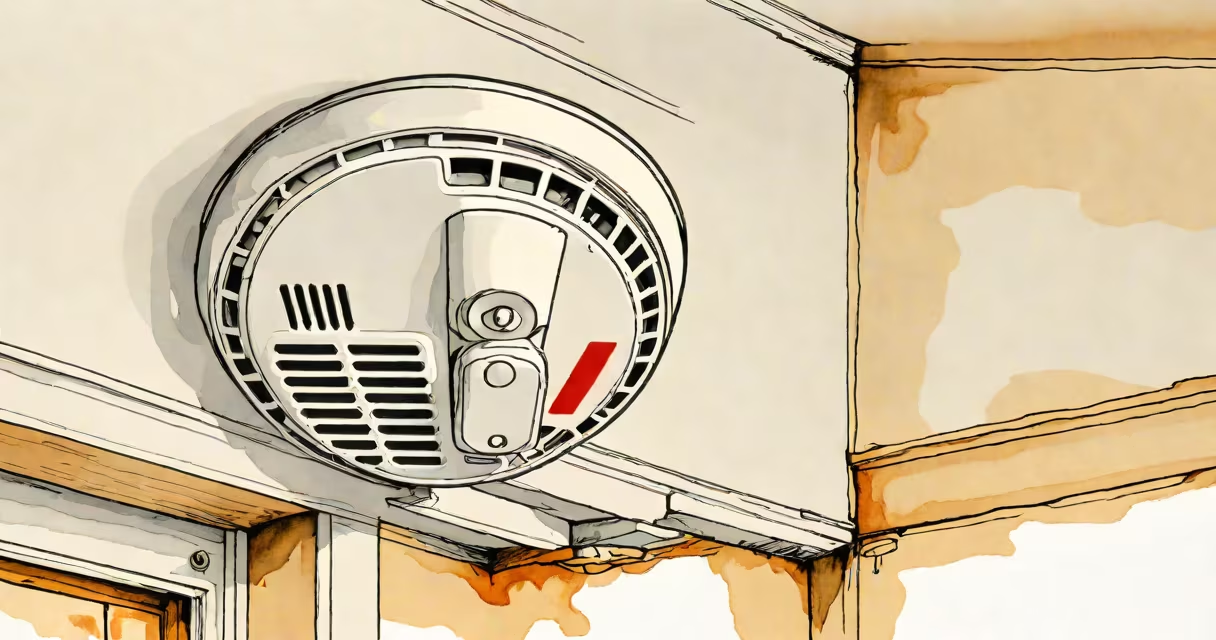
Fire alarms detect smoke, heat, or both and trigger loud alarms to alert occupants of potential fires. These devices are essential for early fire detection, giving people time to evacuate safely.
Most fire alarms use sensors to detect either smoke particles or rapid temperature increases. When triggered, they activate a loud siren or strobe light to warn everyone in the building. Some models connect to monitoring services that alert firefighters automatically.
Fire alarms come in several types, each suited for different environments:
| Type | Detection Method | Best For |
|---|---|---|
| Photoelectric | Detects smoke particles by disrupting a light beam | Living areas, bedrooms |
| Ionization | Uses a small amount of radioactive material to detect smoke | Kitchens, garages |
| Heat Detectors | Triggers when temperature exceeds a set limit | Kitchens, attics, garages |
| Combination Smoke and CO Detectors | Detects both smoke and carbon monoxide | Every level of the home |
According to the National Fire Protection Association, three out of five home fire deaths result from fires in properties without working smoke alarms. Installing and maintaining fire alarms reduces this risk.
Fire alarms are required by law in most residential and commercial buildings. Homes typically have them in hallways, bedrooms, and living areas. Offices, schools, and hospitals use larger, interconnected systems that notify fire departments directly.
Early warning is important because fires spread quickly. A fire alarm's loud siren ensures everyone hears the alert, even while sleeping. Some models include voice alerts that announce the location of the fire.
Many people think fire alarms only detect smoke, but some models respond to heat alone. Others assume all alarms use the same technology, but photoelectric and ionization sensors work differently. Photoelectric alarms are better at detecting slow-smoldering fires, while ionization alarms respond faster to fast-flaming fires.
During a home renovation project, I installed interconnected smoke alarms on every floor. One day, a kitchen appliance malfunctioned and produced smoke. The nearest alarm triggered immediately, waking everyone in the house. The loud siren gave us enough time to evacuate safely and call the fire department before flames spread.
Without that early warning, the situation could have been far more dangerous. This experience reinforced the importance of having working fire alarms throughout a home.