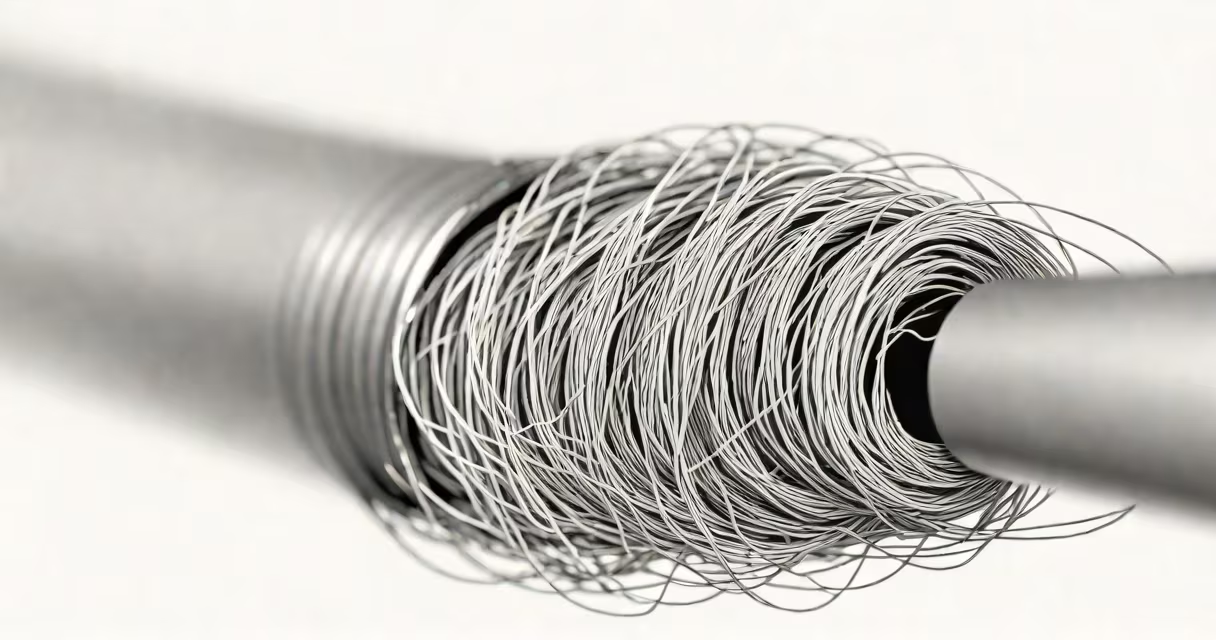
A fiber cable is a thin, flexible strand of glass or plastic that transmits light signals for high-speed communication. These cables are typically bundled together and protected by outer layers to ensure durability and performance.
A single fiber cable consists of several key components:
Fiber cables come in two primary types based on their core material and structure:
| Type | Description | Common Uses |
|---|---|---|
| Single-mode Fiber (SMF) | Has a smaller core diameter (9 micrometers) and uses a single ray of light (mode) to transmit data over long distances with minimal signal loss. | Telecommunications, internet service providers, and long-haul networks. |
| Multimode Fiber (MMF) | Has a larger core diameter (50 or 62.5 micrometers) and allows multiple rays of light to travel simultaneously, suitable for shorter distances. | Local area networks (LANs), data centers, and video/audio applications. |
Fiber cables transmit data using light pulses generated by lasers or LEDs. The light travels through the core by bouncing off the cladding due to a phenomenon called total internal reflection. This method helps the light signal remains intact over long distances without significant loss of quality.
For instance, in a telecommunications network, a laser diode converts electrical signals into light pulses. These pulses travel through the fiber cable's core, guided by the cladding, and reach the other end where a photodetector converts the light pulses back into electrical signals. This process enables high-speed data transmission with minimal interference.
Fiber cables offer several advantages over traditional copper cables:
However, fiber cables are generally more expensive and require specialized equipment for installation and maintenance. Copper cables remain popular for short-distance applications where cost and ease of installation are priorities.
One common misconception is that fiber cables are fragile because they are made of glass. While the core is made of glass, the surrounding layers provide significant protection. Modern fiber cables are designed to withstand various environmental conditions and physical stresses, making them durable for both indoor and outdoor use.
Another misconception is that fiber cables are only used for internet and telecommunications. In reality, fiber cables have many applications, including medical imaging, industrial automation, and military communications. Their versatility and reliability make them a preferred choice in many industries.