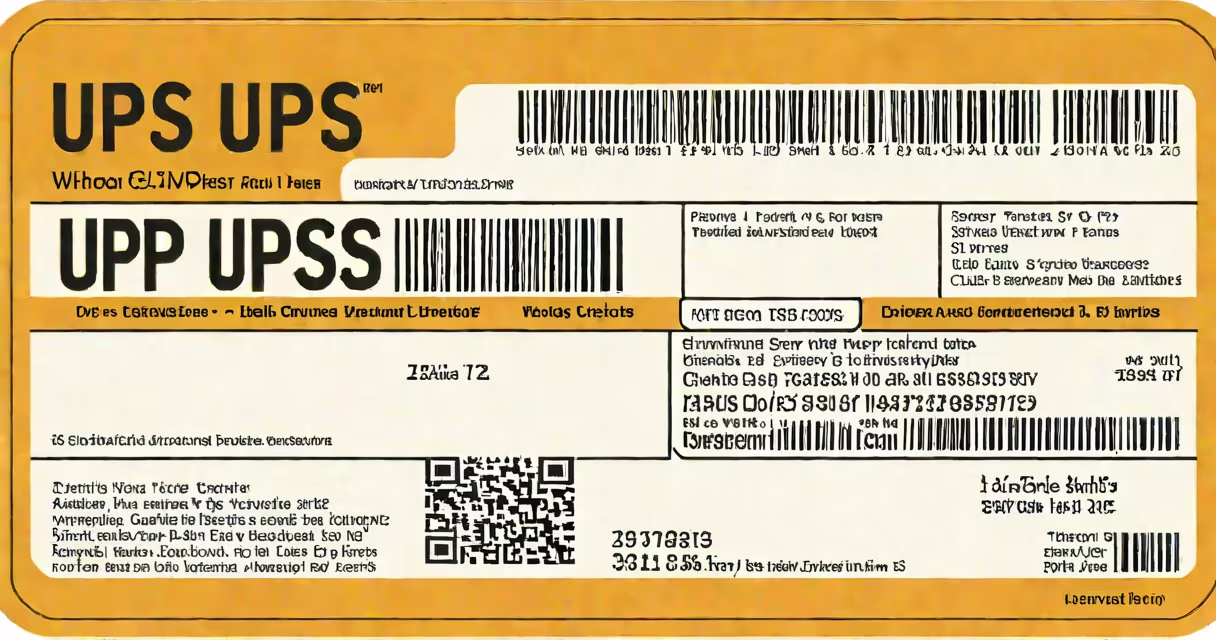
A UPS label is a standardized shipping document containing recipient address, sender information, and tracking numbers printed in a specific format. These labels are important for package tracking and delivery.
Every UPS label includes several essential elements:
The label is divided into sections, each providing specific information. The barcode, typically located near the top, is essential for tracking. Below the barcode, you'll find the recipient and sender addresses, followed by the tracking number and service level details.
For example, a UPS label for a package sent from New York to Los Angeles would display:
Many people confuse UPS labels with other shipping labels, such as those used by FedEx or USPS. While they share similarities, each carrier has unique label formats and barcodes. For instance, a FedEx label might include additional service indicators not found on a UPS label.
Another common mistake is assuming that all UPS labels are the same size. In reality, labels can vary in size depending on the package dimensions and the amount of information required. Some labels may even include additional labels for special handling instructions.
When I worked at a small shipping company, I noticed that many customers were unsure how to read their UPS labels. I created a quick reference guide that highlighted the key components and their locations. This simple tool reduced customer inquiries and improved efficiency.