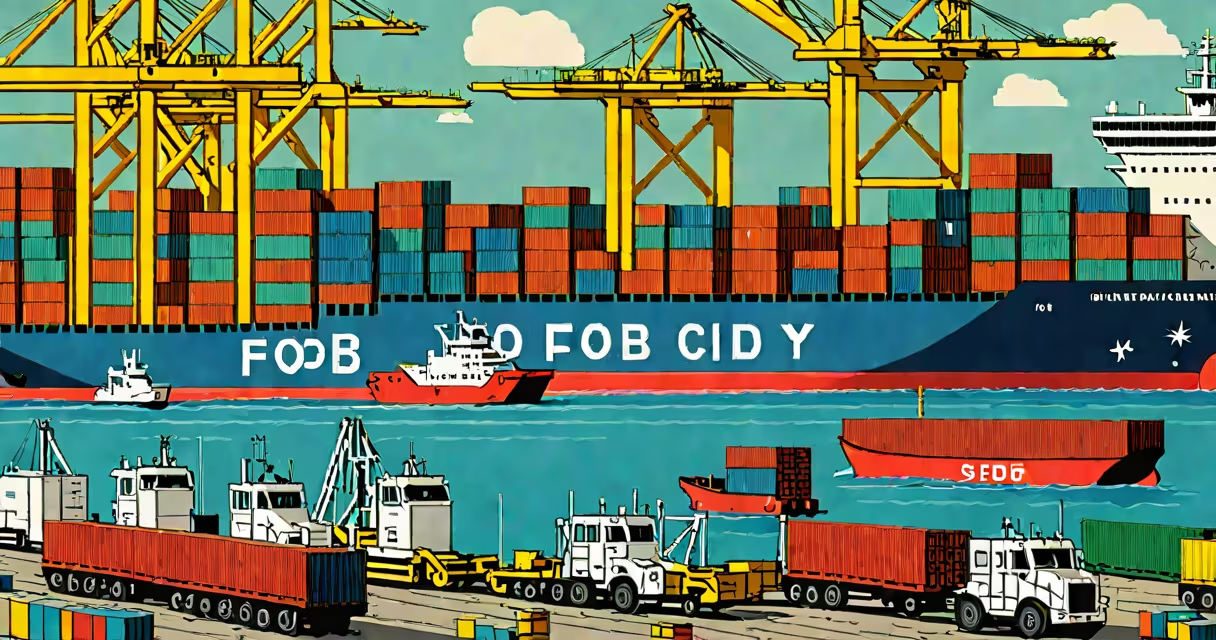
FOB origin (Free On Board origin) is an international shipping term where the seller delivers goods to a named port, and the buyer assumes all costs and risks from that point onward. This Incoterm specifies the exact location where responsibility transfers.
The FOB origin rule means the seller is responsible for delivering goods to the port of origin, loading them onto the vessel, and clearing them for export. Once the goods pass the ship's rail at the port of origin, the buyer takes over responsibility for transportation costs, insurance, and any damage or loss during transit.
For example, if a U.S. company sells machinery to a Canadian buyer with FOB origin terms, the U.S. seller arranges transport to the U.S. port, loads the machinery onto the ship, and handles U.S. export documentation. The Canadian buyer then pays for ocean freight, unloading at the Canadian port, and any additional transportation to the final destination.
While FOB origin is the most common variation, other FOB terms exist:
| FOB Term | Responsibility Transfer Point |
|---|---|
| FOB Origin | Ship's rail at port of origin |
| FOB Destination | Ship's rail at port of destination |
| FOB Vessel | When goods are on board the vessel |
FOB origin is commonly used in international trade because it defines responsibilities between buyer and seller. It's particularly useful for exporters who want to limit their liability to getting goods to their home country's port. According to the International Chamber of Commerce, FOB terms are among the most frequently used Incoterms in global trade.
This term is often used when the buyer has a specific shipping arrangement or wants to control the transportation process. For instance, a European importer might prefer FOB origin when bringing goods they can choose their preferred freight forwarder for the ocean leg of the process.
Many people confuse FOB origin with FOB destination. The key difference is where responsibility transfers: at the origin port for FOB origin, and at the destination port for FOB destination. Another misconception is that FOB includes insurance - it doesn't, unless specifically agreed upon between parties.
I once worked with a client who assumed FOB origin meant the seller handled all transportation. They were surprised to learn they needed to arrange and pay for ocean freight. Clear communication about Incoterms is important to avoid such misunderstandings.
Unlike CIF (Cost, Insurance, and Freight) where the seller arranges and pays for transportation to the destination port, FOB origin places that responsibility on the buyer. Another alternative is CFR (Cost and Freight), where the seller pays for freight but not insurance.