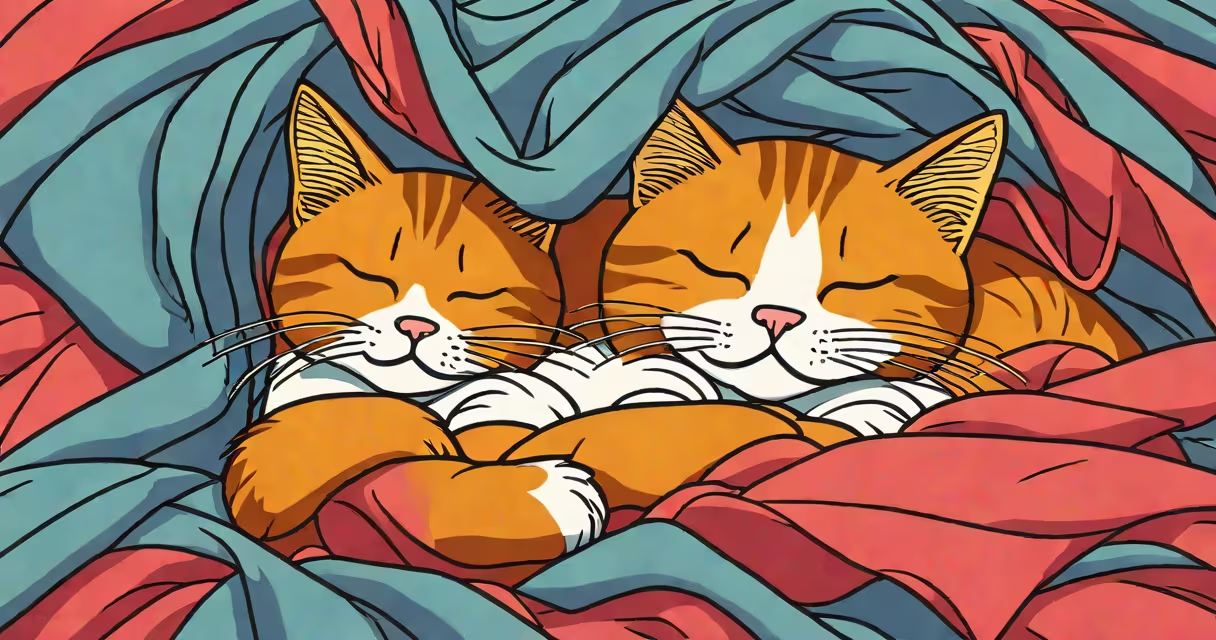
Cats sleep under blankets primarily because it provides warmth, security, and mimics their natural denning instincts. This behavior is common in both domestic and wild felines.
When a cat burrows under a blanket, it creates a small, enclosed space that retains body heat. This mimics the den-like environments where wild cats seek shelter. The blanket acts as insulation against cold surfaces and drafts, helping the cat conserve energy during long sleep cycles.
While blankets are popular, cats also favor other cozy spots:
Cats often choose sleeping spots near their human companions, as they associate people with safety. The rhythmic sound of a human's breathing can also be soothing., cats may seek out blankets that smell like their owners, as familiar scents provide comfort.
This behavior isn't just about warmth-it's also about reducing stress. A study published in the journal Applied Animal Behaviour Science found that cats in enclosed spaces showed lower stress levels than those in open areas.
Some people assume cats sleep under blankets solely for warmth, but security plays an equally important role. Unlike humans, cats don't sleep deeply all at once; they cycle between light and deep sleep. Being under a blanket allows them to stay alert to potential threats while resting.
Another misconception is that cats only seek out soft materials. In reality, they'll choose any spot that offers enclosure, even if it's not particularly comfortable by human standards.
I once had a cat who refused to sleep anywhere except under a specific fleece blanket on my bed. No matter how many other cozy spots I offered, she always returned to that same spot. Over time, I realized she wasn't just seeking warmth-she was also responding to my presence and the familiar scent of the blanket.