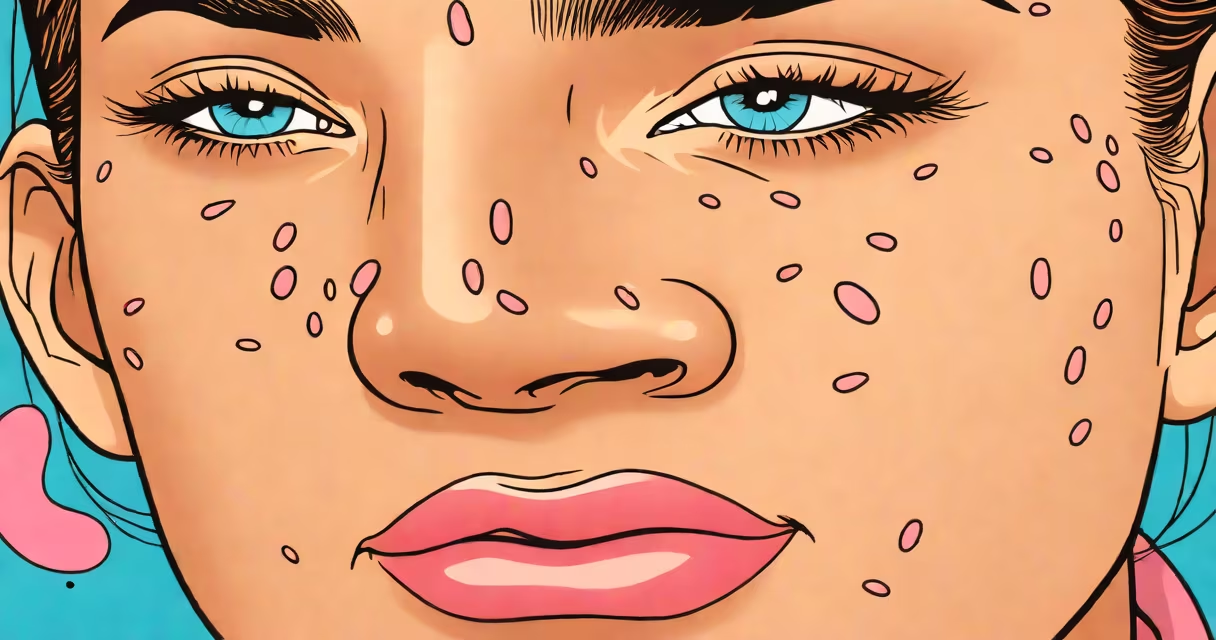
Pimples form when hair follicles become clogged with oil, dead skin cells, and bacteria, leading to inflammation and infection. This common skin condition affects nearly everyone at some point.
Your skin constantly produces oil (sebum) to keep it moisturized. When excess sebum mixes with dead skin cells, it can clog pores. Bacteria like Cutibacterium acnes thrive in this environment, causing redness, swelling, and pus-filled bumps.
| Type | Description | Appearance |
|---|---|---|
| Whiteheads | Closed clogged pore | Small, flesh-colored bump |
| Blackheads | Open clogged pore | Dark spot due to oxidation |
| Papules | Inflamed clogged pore | Small, red, tender bump |
| Pustules | Inflamed clogged pore with pus | Red base with white center |
| Nodules | Deep, inflamed clogged pore | Large, hard lump under skin |
| Cysts | Deep, pus-filled clogged pore | Painful, fluid-filled sac |
Hormonal changes (especially during puberty, menstruation, or pregnancy) increase oil production. Other factors include stress, diet (high-glycemic foods and dairy), certain medications, and genetics. Even improper skincare routines can contribute.
Wash your face twice daily with a gentle cleanser. Avoid harsh scrubs that can irritate skin. Use non-comedogenic products that won't clog pores. Exfoliate regularly to remove dead skin cells. Change pillowcases frequently to reduce bacteria buildup.
Many believe dirty skin causes pimples, but over-cleaning can actually make acne worse by stripping protective oils. The key is balance-clean skin without excessive scrubbing or harsh products.
I once struggled with frequent breakouts until I adjusted my routine. Switching to fragrance-free products and washing my face only morning and night made a noticeable difference within weeks.