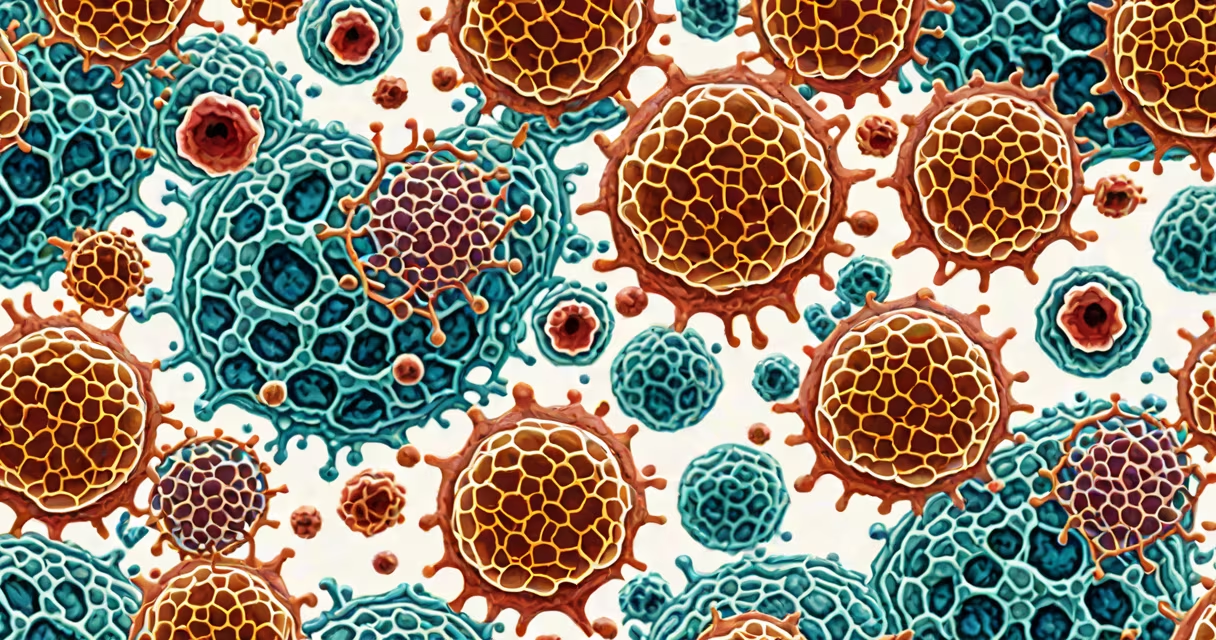
A tumor is an abnormal mass of tissue formed by uncontrolled cell growth. Tumors can be benign (non-cancerous) or malignant (cancerous), depending on their behavior and potential to spread.
Tumors develop when cells divide uncontrollably due to genetic mutations. These mutations disrupt normal cell functions, causing cells to grow and reproduce uncontrollably, forming a mass. The process often involves multiple steps, including initiation (mutation), promotion (growth), and progression (spread).
Tumors are classified based on their behavior and origin:
| Type | Description | Example |
|---|---|---|
| Benign | Non-cancerous, slow-growing, and usually harmless | Lipoma (fat tissue tumor) |
| Malignant | Cancerous, invasive, and can metastasize | Carcinoma (skin, lung, breast cancers) |
| Premalignant | Abnormal cells that may become cancerous | Actinic keratosis (precursor to skin cancer) |
Many people confuse tumors with inflammation or cysts. While inflammation involves swelling due to injury or infection, tumors result from abnormal cell growth. Cysts are fluid-filled sacs, whereas tumors are solid masses of tissue.
Tumors form due to a combination of genetic, environmental, and lifestyle factors. Genetic mutations can be inherited or acquired through exposure to carcinogens like tobacco smoke, radiation, or certain chemicals. Lifestyle choices such as diet, exercise, and alcohol consumption also play a role.
For instance, prolonged exposure to ultraviolet (UV) radiation from sunlight can cause mutations in skin cells, leading to the development of melanoma, a type of skin cancer. Similarly, chronic inflammation can increase the risk of certain cancers by promoting cellular mutations.
Understanding the underlying causes and mechanisms of tumor formation is important for prevention and treatment. Early detection and regular screenings can improve outcomes for individuals at risk.